PENANG IS HOME to more than 200 historic clan houses and district associations, which have shaped its cultural landscape for over two centuries. To a casual observer, these institutions may seem like static remnants of the past; however, many still actively support local communities while doubling as popular tourist sites. Beyond their ageing façades is a history of anchoring the Chinese community locally, overcoming major challenges and managing constant evolution. Penang Monthly explores their journey of adaptation in a changing world.
LEAVING HOME AND REBUILDING IDENTITIES
Our sense of identity is truly shaken when we leave home for distant lands and encounter others greatly different from ourselves. At such times, self-knowledge and exciting adaptations emerge.[1] During the 18th and 19th centuries, many Chinese people left their homes to seek fortunes in places like Penang. While a majority of them hailed from southern Chinese provinces like Fujian and Guangdong, a smaller number migrated from more northerly ones such as Zhejiang, Jiangsu and Jiangxi (see “Minute but Mighty: Getting to Know the Penang San Kiang Association” in this issue). Mid-19th-century George Town was home to a vibrant mix of Chinese communities, including but not limited to the Hokkien, Cantonese, Teochew, Hakka and Hainanese.[2] These dialect group communities settled alongside each another, forming distinct neighbouring districts for safety and for mutual care. Associations not only catered to those with a common origin or lineage, but also those in the same trade.
From this persistent purpose arose a variety of clan houses, dialect associations (huiguan, or wooi kwon/wui koon in Cantonese) and trade guilds or associations (often called hong in Cantonese). Although varying in size and scale, depending on community resources, all demonstrated significant love, dedication and passion in supporting members. Social resources were relatively scarce then, so these institutions played an indispensable role in ensuring the survival of early Chinese immigrant communities.
For new arrivals, such institutional support provided crucial everyday resources. These ranged from spiritual essentials, such as spaces for ancestral worship to practical necessities, for example job opportunities and gathering places for people sharing similar backgrounds. Such support was vital when systems of trust relied heavily on interpersonal networks premised upon shared hometowns or dialects. As they expanded, these associations provided cohesive services such as reliable financial aid, educational scholarships and venues for marriage ceremonies. Matters related to death were also accounted for, such as funeral spaces and burial services (see “Traces of the Pear Garden in Penang: The Forgotten Pat Woh Tong Common Graves” in this issue).
MODES OF ORGANISATION
In pre-war Penang, identity was generally defined by highly intricate boundaries, including specific villages, districts and provinces. Consequently, a single individual could simultaneously belong to multiple organisations, based on shared surnames, dialect groups and professions.
These overlapping identities created an effective social safety net that ensured deep and multilayered protection for Penang’s Chinese communities, and a strong sense of belonging for individuals.
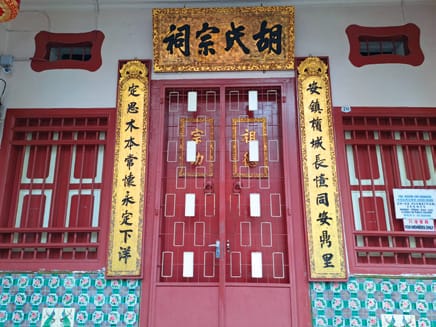
Clan houses strictly represent individuals with either a shared surname or a more specific lineage, often linked with distinctive hall names (tang hao). These names usually originated from areas where a prominent lineage once thrived or commemorate titles bestowed by the Chinese emperor for an ancestor’s noble deeds. For instance, the surname Tan is traditionally associated with the Eng Chuan (颖川) hall name.[3] Interestingly, some clan organizations may represent multiple surnames, because certain groups have smaller populations or share historical connections. For instance, Saw Khaw Lean Ghean Thum Boo Chong Shu (大山脚苏许连颜谭巫宗祠) in Bukit Mertajam (established 1958) harmoniously houses six distinct lineages under one roof, featuring a shared altar dedicated to individual ancestors.[4]
In contrast, district associations foreground geographical origins, defined by an immigrant’s home region in China and their shared native language. For example, a person originating from Shunde (Soon Tuck) District in Guangdong would have been eligible to join the Soon Tuck Wooi Koon (Shunde Association, established 1838).[5] But the association was, in turn, part of Penang’s umbrella Kwangtung & Tengchow Association (established 1795), serving as the major support pillar for immigrants from these areas—including Shunde.[6] Thus, a newcomer could meet neighbours from their own hometown alongside a diverse community of Cantonese, Hainanese, Hakka and Teochew folk, while the provision of essential services (including a proper and dignified burial space) enabled individual peace of mind.
Trade associations also served as essential hubs for finding employment within specific vocations. While often aligned closely with certain dialect groups largely because skills and craftsmanship were once deeply intertwined with regional traditions—they are generally more inclusive than lineage- or geography-based organisations. A prime example is the Ta Kam Hong (Penang’s goldsmiths’ guild), whose early establishment was largely rooted among the Toishan (Taishan) com-munity from Guangdong (see “Ta Kam Hong: More Than Just a Guild for Goldsmiths” in this issue).[7] Beyond serving as a vital business network, it also promotes education and supports local social welfare."
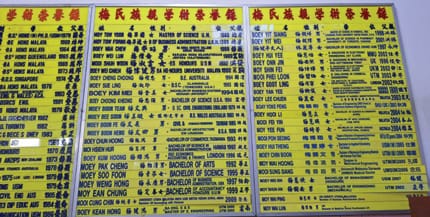
With time, these institutions came to play vital roles in local cultural development. Several founded schools and actively encouraged descendants to pursue academic excellence by giving out scholarships. Over generations, these organisations have proudly upheld their cultural roles and foundational ethos by providing welcoming spaces where communities still gather to celebrate deities’ birthdays, honour ancestors and observe essential traditional occasions (for example, the Winter Solstice and Qingming, or Tomb-sweeping Day).
PAST AND FUTURE
The remarkable boom of these institutions, particularly prior to the mid-20th century, demonstrates the vitality of Penang’s Chinese communities. In fact, many were the first of their kind in Malaysia, such as the Seh Tek Tong Cheah Kongsi. This kongsi has the country’s most historic Cheah (Xie) clan house, and remains dedicated to the ancestral lineage from Fujian’s Sek Tong Village.
It was not uncommon for new associations to emerge even after independence, with some improving their communal strength by integrating resources. Generally, these institutions entered a poignant transitional period after the 1960s, contextualised by the emergence of a new national identity, combined with the availability of more robust public resources. To be sure, many now face a shortage of new members; they offer fewer practical benefits for younger generations, whose daily needs are now met by modern society. Most significantly, these younger people no longer automatically connect with distant ancestral cultural traditions. Consequently, many organisations, especially clan houses and district associations, began establishing dedicated youth and women’s sections, providing a potential glimmer of continuity (see “Future-proofing an Ancestral District Association” in this issue). Indeed, institutional sustainability requires immense dedication and passion so that organisations can continue serving as vital cultural hubs.
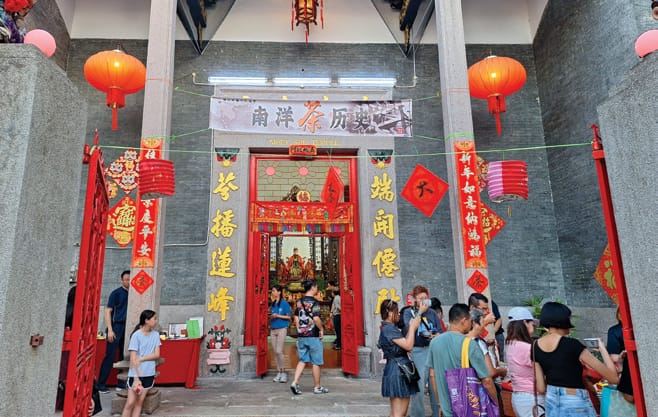
They are also important to preserving local historical memory. Their architecture and interior decorations, coupled with extensive collections of artefacts such as plaques, tell valuable stories (see “Eye-ing Traditional Chinese Architecture and
Heritage Building Conservation in George Town” in this issue). Many researchers and passionate individuals have explored how district associations have contributed to Penang’s art history. For example, the Hui Aun Association Penang’s plaque was written by the famous calligrapher, Tsue Ta Tee (see Penang Monthly July 2025). This was done between the 1950s and 1960s during his brief stay in Penang, when the association became a vibrant site for literati and artists alike to gather and hold exhibitions.[8] Ultimately, their artistic and cultural value should not stay cherished only in George Town. All associations hailing from across Penang represent an equally invaluable part of a shared collective history and heritage, not only of the state, but the whole region.
FORMING CULTURAL HUBS IN A MULTICULTURAL SOCIETY
An institution’s confidence in and willingness to share stories with visitors is of paramount importance to its transformation. Engagement is an essential pathway to broadening public knowledge, without which the profound meaning behind these institutions risks being forgotten. Over the past two decades, numerous organisations and passionate individuals have worked tirelessly alongside clan houses, district associations and trade guilds to explore and preserve this heritage (see “A Glimpse into Penang’s Hakka Community” in this issue).
largely because skills and craftsmanship were once deeply intertwined with regional traditions—they are generally more inclusive than lineage- or geography-based organisations. A prime example is the Ta Kam Hong (Penang’s goldsmiths’ guild), whose early establishment was largely rooted among the Toishan (Taishan) com-munity from Guangdong (see “Ta Kam Hong: More Than Just a Guild for Goldsmiths” in this issue).[7] Beyond serving as a vital business network, it also promotes education and supports local social welfare.
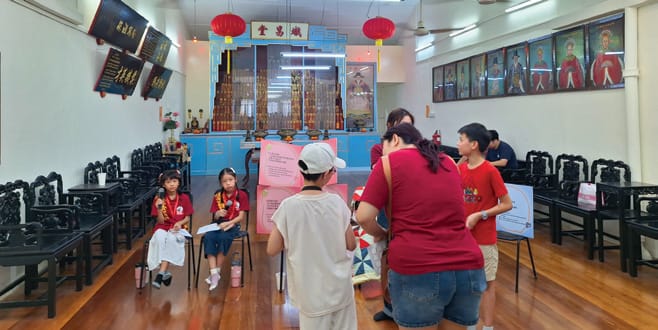
With time, these institutions came to play vital roles in local cultural development. Several founded schools and actively encouraged descendants to pursue academic excellence by giving out scholarships. Over generations, these organisations have proudly upheld their cultural roles and foundational ethos by providing welcoming spaces where communities still gather to celebrate deities’ birthdays, honour ancestors and observe essential traditional occasions (for example, the Winter Solstice and Qingming, or Tomb-sweeping Day).
Undoubtedly, the 2008 joint listing of Melaka and George Town as a UNE-SCO World Heritage Site provides powerful inspiration. The annual George Town Heritage Celebrations, managed by George Town World Heritage Incorporated (GTWHI), features distinct themes to guide visitors as they immerse themselves in the city’s diverse cultural tapestry. This supportive environment has encouraged many Chinese associations to open their doors, share histories and actively participate within the wider multicultural scene, thus allowing their vital tangible and intangible values to be explored.
THE AMAZING PENANG MIAOHUI
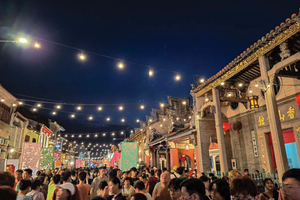
The Penang Miaohui event (since 1999) is an excellent demonstration of how dedicated teams can work with local associations to promote cultural significance. Organised by the Penang Chinese Clan Council, and planned and coordinated by the Penang Cultural Inheritors Society (also known as the “Inheritors”), Miaohui has been held annually during the Lunar New Year period. With an overarching focus on cultural preservation and heritage, the organising team invests tremendous effort into coordinating with participating groups. Supported by the Penang state government and local communities, years of dedicated effort have brought together numerous Chinese clan houses, district associations, temples and trade guilds to share their rich histories.
The festival has become both the liveliest event of Penang’s Lunar New Year calendar and a crucial gateway for introducing traditional culture to visitors. In 2026, the festival area expanded to 12 historic streets in George Town, featuring 23 local clan associations and temples, 90 external counterparts, over 120 local hawkers and 50 cultural exhibition booths offering interactive experiences like calligraphy and other traditional arts.
This long-term educational mission has evolved beautifully over the years. Kwoh Shoo Chen, a dedicated core member of the Inheritors’ organising team for decades, has expressed heartfelt gratitude to the participating institutions, volunteers and partners, noting that organising Pen-ang Miaohui would have been impossible without their unwavering support. She highlighted the vital role of the volunteer programme, first introduced in 2017, in helping associations explain their intricate histories to visitors. By 2019, the team even recruited primary school students as junior commentators, stationing these young guides at various locations to proudly pass on knowledge. In 2026, volunteer numbers reached a post-pandemic high of 500–600 people, aged as young as 14 to individuals in their 80s. Many dedicated participants and supporting clan houses travelled from Seberang Perai, Kuala Lumpur and Kedah, among other locations, to take part.
With gentle, heartfelt warmth, Kwoh reflected: “We could not be more grateful for the immense support from all associations and volunteers. Their participation embodies the true spirit of Miaohui, ensuring that the diversity of traditional culture is preserved, inherited and passed on to the future.”
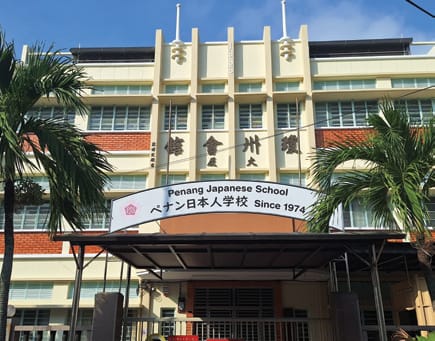
For many institutions facing recruitment challenges, Miaohui has also become an important platform for reconnecting with their roots and attracting new members. Remarkably, one institution even recruited a spectacular 30 new members during the event! In recent years, there has been a conscious effort to expand and redefine Miaohui beyond Chinese culture alone. The 2026 festival marked a historic milestone by welcoming a multitude of other cultural organisations, holding an open house on the streets near the Lebuh Aceh Mosque and featuring vibrant showcases of Indian, Eurasian, Japanese and various heritage cultures. At its core, the festival aims to convey Miaohui’s identity as a fundamentally cultural celebration, by extending an open invitation to embrace and unite Penang’s increasingly diverse communities.
Chong Jian Mei, now in her early-30s, has served as Miaohui’s event master planner for several years. Like many of her peers, she balances a demanding full-time job against volunteering an immense amount of time to Miaohui’s rigorous, yearlong planning schedule. Since joining in 2021, she has found deep meaning in both the event and the dedicated individuals who bring it to life. As a Christian, her involvement was initially met with hesitation by her family, who assumed that Miaohui was a strictly religious festival. However, through deeper engagement, she came to discover its testament to cultural preservation and diversity. Beyond Miaohui, the team also organises the Meng Eng Soo Open Day on 7 July, to honour ancestral spirits, and the annual Cultural Cultivation Programme, which focuses on youth expression.
Spanning two centuries of history, the journey to revitalising these institutions has never been easy; long-term sustainability remains a challenge. However, through the combined and passionate effort of the communities involved, this priceless heritage can be enjoyed and sustained for generations to come.
CAPTIONS
(Cover spread) Even at night, many visitors remain enthusiastic in joining activities at the Penang Miaohui.
- Penang Tay Koon Oh Kongsi, an historic Chinese clan association located along Lebuh Penang.
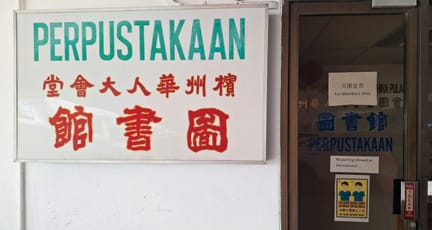
- The library of
the Penang Chinese Town Hall has played an important role
in preserving the anniversary publications of Chinese associations in Penang. - During the 2026 Penang Miaohui, the Moe She Temple welcomed visitors with an exhibition on tea culture.
- A key feature of the Miaohui is the involvement of young commentators, who bring cultural stories to life for visitors.
- Chinese associations have long prioritised education for the younger generation, as shown in these Moe Clan academic achievement honours.
- Persatuan Hainan Pulau Pinang, an important community organisation with a longstanding role in supporting Penang’s Hainanese community.
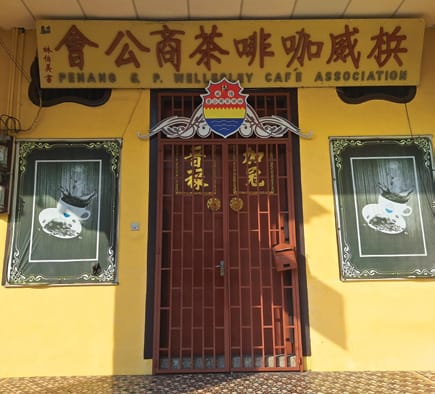
- A trade association, the Penang and Province Wellesley Café Association is located on Muntri Street.
ENDNOTES
- For an in-depth look into the emerges of distinct identities, and even nations, see: Anderson, B. (1983). Imagined Communities, Verso.
- Chen Z. (2020), 马来西亚槟城华侨建
筑 [Overseas Chinese Architecture in Penang, Malaysia]. China Architecture & Building Press. - Kwoh S.C. (ed.)
(2013) 「 」 槟州宗祠家庙简史(上集[Chinese Clans in Penang: A Concise History (Volume 1)]. Penang Chinese Clan Council. - Ibid.
- Editorial Committee of Penang Shunde Association. (1992). 槟城顺德会馆庆祝成立150周年纪念特刊 (1838-1988) [Souvenir Magazine
of Penang Shunde Association Celebrating its 150th Anniversary
(1838-1988)]. - See the Kwangtung & Tengchow Association’s website at https://www. kwangteng-pg.org/.
- Perpetual Memorial Park. (2025). 在行业里看历史,在牌匾中听故事,一个勃勃生机的华人时代 [Seeing History Through Industries, Hearing Stories Through Plaques: A Vibrant Chinese Era]. 原乡柔情,槟城纪[Our Native Land | Penang Chronicles].
- Tan G.S. & Lee S.C.
(2021). The Chinese Calligrapher to the South. ERUDITE, 2(2), 47–80.