
THE CHANGES TO George Town’s core heritage area over the last decade have been significant. Although the “hardware”—the wonderful heritage façades, quirky street art, always-been-there traditional kopitiams—is intact, the “operating system” seems to have switched. Once-charming streets are now thronged with tourists spilling over the pavements, where cars also fight for space. New shopfronts—for cafés and souvenir shops—cater to the tourist flow, taking over from traditional trades.
Yet a quiet holdout remains in a corner of Lebuh Armenian. An uncle sits in the gloom of his old-style bicycle shop, surrounded by antique repair paraphernalia.[1] Tourism comes as a blessing and a curse. Before Covid-19 halted international travel, the industry was undergoing exponential growth: 1.5bil people traveled globally in 2019 alone. That came at a cost, however, which has compounded over time; destinations have had to struggle to balance economic gains against social and ecological limits. Thailand closed several popular tourist islands in 2011, and the Philippines shut down Boracay in 2018, in both cases to recover from tourism-induced environmental damage. Seasonal closures are now routine. Meanwhile, Bali faces gridlock, pollution and water scarcity, and is losing traditional farmland to unchecked tourism development. Iceland, which banked on tourism to overcome the 2008 financial crisis, hosted 2.5mil tourists in 2025 (more than six times its population), straining its pristine environment, infrastructure and communities. In contrast, Penang, with a population of 1.8mil, recorded 8.2mil registered hotel guests—5.2mil domestic and over 3 mil international—2024 alone, excluding those using online reservation platforms and staying in unlicensed accommodation, based on preliminary figures.[2]
Post Covid-19, mass tourism has rebounded with a vengeance in cities like Barcelona and Venice, sparking “Tourists Go Home” protests by local residents. The pattern is clear: the more popular a destination becomes, the greater the damage when tourism grows unchecked. One solution is sustainable tourism, designed to take local human and ecological needs into consideration.
FROM CRISIS, AN OPPORTUNITY
The Covid-19 shutdown forced a reckoning. Governments worldwide realised that they needed to redesign tourism policies to balance economic benefits against social, cultural and environmental protections. By 2025, sustainable tourism had become central to national tourism strategies in multiple countries worldwide.[3] In parallel, travellers are increasingly seeking meaningful travel experiences over mass tourism. Surveys show growing interest in sustainable tourism options, less crowded and alternative destinations (including nature destinations), and higher health and hygiene standards. While cost still remains the primary concern, the shift in priorities is unmistakable; which, in the eyes of sustainability advocates, is long overdue.
Malaysia is exceptionally well-positioned for tourism, with its beguiling mix of indigenous, migrant and colonial histories and cultures, natural habitats, charming small towns, modern infrastructure as well as a central location within ASEAN. The ambitious Visit Malaysia 2026 (VM2026) targets, at 47mil foreign visitors and RM329bil in total receipts, speak to its economic importance. In 2024, tourism contributed over 15% (RM102.2bil) of Malaysia’s national gross domestic product (GDP), surpassing pre-pandemic levels.
While often overlooked as less exciting compared to international travel, domestic tourism offers distinct advantages: it is accessible, affordable, generates lower emissions and directly benefits local economies. It became the backbone of Malaysian tourism’s recovery, and by 2025, domestic visitor numbers had jumped 11.5% to 290.1mil, with spending rising 13.3% to RM121bil. With the VM2026 campaign in full swing, these figures are expected to climb further. However, the rebound is unevenly distributed—data indicate Selangor and Kuala Lumpur showed strong recovery, while states like Kelantan and Perlis lagged behind.
BUILDING SUSTAINABLE TOURISM TOGETHER
Since 2022, the Madani government has prioritised sustainable and inclusive development to uplift rural and underserved regions while meeting the United Nations’ (UN) Sustainable Development Goals (SDGs). The Ministry of Tourism, Arts and Culture (MOTAC) embedded these commitments into the National Tourism Policy 2020–2030. In December 2022, the UN Development Programme partnered with MOTAC and the Ministry of Finance (MOF) to launch the Sustainable Tourism Recovery project. The goal: building community resilience and strengthening risk management to limit the exploitation of natural and cultural assets.
To be sure, sustainable tourism concepts had already been taking root, including through grassroots initiatives. Niche providers in ecologically sensitive areas, non-governmental organisations (NGOs) and community-based organisations had been pioneering such practices for years. As the world pivoted online during the pandemic lockdowns, some like-minded practitioners connected, united by the belief that consci-entious travel experiences could rebuild and regenerate communities and ecosystems. As their shared vision crystallised, they became the founding members of STM: a platform for practitioners, NGOs, communicators and academics to share knowledge on local sustainable tourism practices.
Co-founded by THF, a Penang-based charitable trust championing conservation, and Tengah Island Conservation, a community-based conservation NGO in Johor, STM was launched with a masterclass seminar on embedding sustainability through the “4Cs”—a holistic approach balancing community protection and benefit, preservation of culture, conservation of natural assets and resources, and the promotion of commerce that sustains livelihoods. The seminar, led by Delphine Malleret of the Long Run, a global sustainable tourism network, brought together tourism operators, government officials, NGOs and academics nationwide.
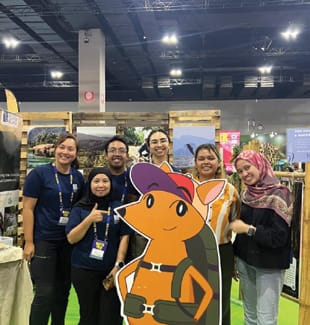
STM’s approach goes beyond technocratic and managerial framings for operational sustainability (e.g., tourism sustainability certifications) to achieve a more fundamental and transformative intent: tourism that can potentially contribute to the regeneration of communities, cultures and ecosystems. It pivots away from an overly tourist-centred focus to balance the needs of community and place. In 2024, with STM poised to expand its network, THF secured matching funds from the Madani government to support eight grant projects that year. A further tranche from the MOF in 2025 allowed STM to expand its support to 31 grantees across 10 states, including Sabah and Sarawak. The projects spanned several thematic components: marine conservation, national geopark development, tourism in and around protected landscapes, as well as the promotion of urban green spaces. These grants support “off-the-beaten-path” destinations through projects led by local communities, small enterprises, nonprofits and community-based organisations. These aim to develop new tourism offerings as alternatives to established destinations while protecting culture and heritage, landscape and biodiversity, by ensuring that tourism strengthens rather than simply exploits local assets. Many projects also function as place-making efforts, where local communities use and design public spaces to create meaningful and functional environments that encourage respectful exchange between local residents and visitors.
SPURRING GROWTH IN THE NORTH
Tourism in northern Peninsular Malaysia has historically centred on Penang and Langkawi. Yet the potential of the Kedah mainland and Perlis—positioned strategically close to these established destinations—remains largely untapped, despite significant potential as alternative northern destinations. Here, the designation of “geoparks” can function as catalysts. Geopark landscapes encompass sites of special importance, whether of geological and archaeological interest, unique natural habitats and biodiversity, or cultural heritage values. These features make them ideal regions for conservation, education, research and sustainable tourism, which benefit local communities living within their landscape.
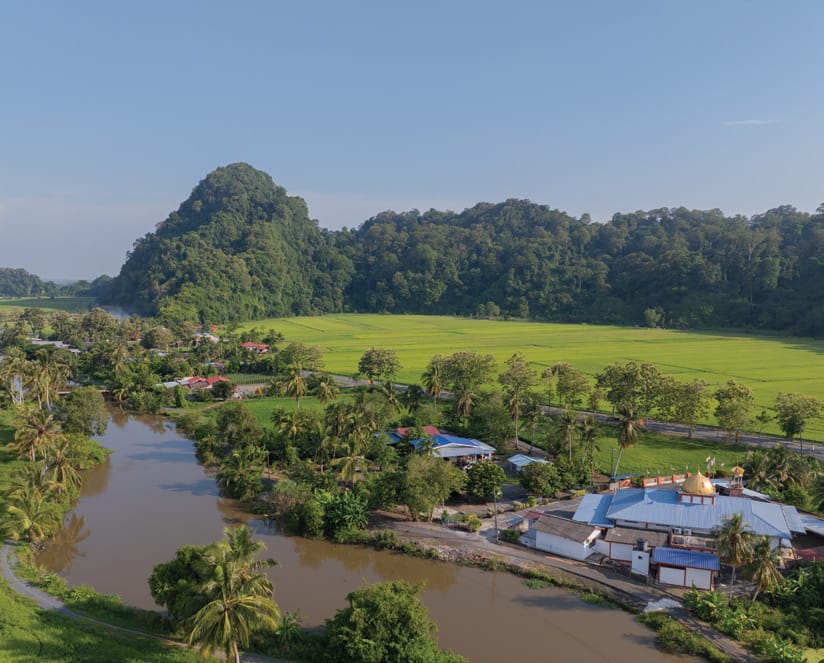
Within the last decade, both states have earned National Geopark status—Jerai (Kedah) in 2016 and Perlis (in its entirety) in 2023—and STM grants support local projects to realise their potential for sustainable tourism. Perlis, Malaysia’s smallest and most northerly state, is recognised for its ancient geological formations and dramatic karst landscapes with steep cliffs, hidden valleys and deep caves along the Nakawan Range (Malaysia’s longest continuous limestone ridge). The region also harbours rare biodiversity in a unique, semi-arid ecological zone, where the 5,000ha Perlis State Park at the Thai border serves as a vital conservation area. Hidden within its limestone caves lies an even lesser-known story: a rich tin-mining heritage.
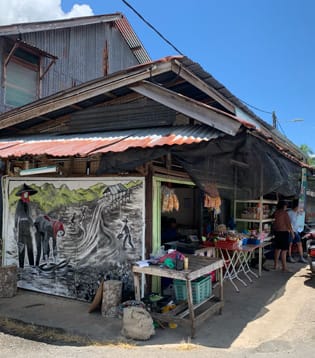
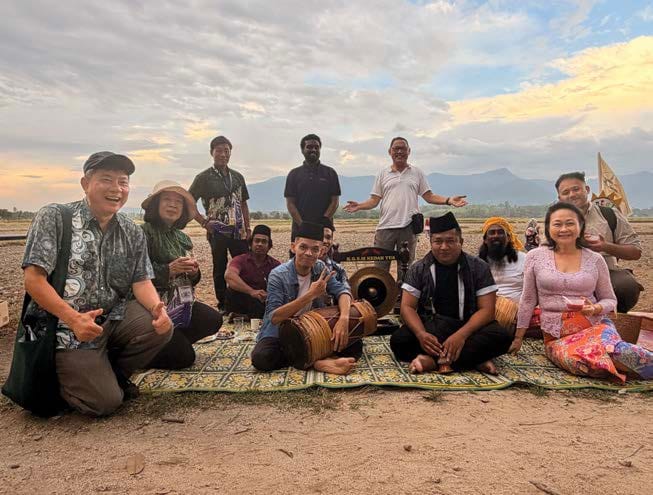
Despite these geological and ecological treasures, most Malaysians remain unaware of Perlis’s uniqueness. In separate projects, several STM grantees (photographer Peter Ong of Monyet Ventures, a team comprising photojournalist SC Shekar, author Liew Suet Fun and artist Jennifer Linggi) have leveraged authentic storytelling. Grant-ees worked with local villagers and local experts: the people who know best, hence leading to community ownership of project outcomes. The results include a sequel to the successful documentary Wang Kelian, Perlis—The Forgotten Valley, which featured descendants of tin miners and a new generation of homegrown conservationists on a mission to protect their region’s biodiversity and geological treasures. Its launch was officiated by the Raja Muda of Perlis, and remains freely available on Youtube. Wang Kelian’s visibility sparked renewed community pride and catalysed follow-on projects. One was a mural in town depicting women miners’ lives. Another was the rehabilitation of Denai Warisan, a 10km heritage trail running through a 370-million-year-old limestone forest. This trail was once the only physical link between the communities, and was therefore the lifeline for Wang Kelian’s villagers visiting the thriving market town of Kaki Bukit.
By telling locally rooted narratives about their history, culture and struggles as pioneer communities, this approach fosters respect and understanding for local communities. This has led to deeper and more meaningful cultural exchanges between visitors and hosts, transforming Perlis into a place with depth and meaning for visitors.
These examples represent the first steps on a longer path towards sustainable tourism. They demonstrate how communities can reclaim their voices, revive heritage and share survival stories. Place-making and authentic storytelling are essential and powerful starting points, but they cannot sustain tourism growth alone. As destinations capture the public imagination through compelling narratives and events, they inevitably attract increased visitor footfall. Without careful planning, such attention can overwhelm smaller destinations or ill-prepared communities. Deliberate and sustainable growth of “off-the-beaten-path” tourism requires great care. Critically, decisions must foreground local sensitivities and community priorities. The challenge ahead is to channel growing visitor interest into benefits that strengthen communities and the uniqueness of their landscape.
UNLOCKING PENANG’S POTENTIAL AND EMERGING CHALLENGES
Penang is the northern peninsula’s main economic powerhouse, and one of Malaysia’s top tourism destinations. As it diversifies its tourism strategy, challenges have become apparent. A 2024 Penang Institute study, for example, found that George Town and Gurney Drive are “experiencing tensions between rapid tourism growth and liveability”. It also noted growing challenges in other tourism zones on the island, and concluded with an urgent call to prioritise “sustainable infrastructure to support tourism growth without harming local life or ecology, diversification in tourism offerings […], increased community involvement in planning to meet local needs and preserve cultural heritage, and stringent conservation measures in natural parks and coastal areas.”[4]
The idea that Penang is ideally positioned to be a northern gateway for tourism is not new. “Penang already functions in practice as the best-connected entry point into the northern corridor, but policy and branding still seem to treat Penang mainly as a destination in its own right,” said Vikneswaran Nair, a Malaysian academic specialising in sustainable and responsible tourism. “There does seem to be room for a more deliberate policy and destination-management conversation around Pen-ang as the northern gateway.” With tourism concentrated in Penang, how can incentivising tourism to neighbouring states distribute benefits more evenly across the northern region and attract longer stays?
“This has been one of the questions we’ve always asked,” Nigel Wong, president of the Malaysian Association of Tour and Travel Agents (MATTA), said. Penang has a very clearly defined tourism plan compared to other states, and being able to expand to include regional partners is not going to detract from its attractiveness, “but rather enhance it,” Wong added. Yet a gap remains. “There must be involvement by the government and the public sector of the different states to make this possible—everything from mobility and accessibility to promotions.”
While some tour agencies are already promoting packages integrating the northern states, a joint regional tourism narrative alone will not suffice. “[N]arrative alone won’t put boots on the ground.” Other factors are critical to encourage a sustainable regional tourism crossover, such as having the right infrastructure and facilities (including the availability of clean toilets, Wong remarked) and tourism offerings and services that appeal to target markets.
Perhaps Penang’s regional role should be “to channel [tourists] more responsibly into a broader northern ecosystem of places and communities,” Nair suggested. And success could be measured differently, for example “not just by arrivals to Penang, but by regional dispersal, length of stay, local spending and reduced site concentration.”
As for sustainable tourism in the north, more broadly? “The gateway idea can be tied to sustainable tourism only if redistribution is planned, community-linked and low-impact,” noted Nair. “Otherwise, it simply spreads the same extractive model across a wider geography.”
GETTING A MAINSTREAM PUSH
Malaysia stands at a pivotal moment in tourism development. The industry’s impressive recovery and the continued resurgence expected from the VM2026 campaign presents both opportunities and risks. The tourism industry is also stepping up to the challenge. The MATTA Eco and Sustainable Tourism Initiative (MESTI) was launched two years ago to drive responsible growth and long-term industry viability. “We wanted to debunk the myth that it had no business relevance,” said Wong. “We needed to start somewhere. We’re not saying that we are 100% sustainable, but we’re actually at the most important juncture: creating awareness [both within the industry and amongst the public].”
Ultimately, building a “travel for good” tourism model will depend on how well the different pieces of the puzzle—advocacy, policy commitments and grassroots momentum—fit together. It will need clear short-, medium- and long-term strategies coordinated across all levels of government, public–private partnerships and investments, as well as, most critically, genuine community involvement. A key lesson from the STM grant projects is that sustainable tourism requires trust-building, community ownership, creative and careful stewardship, and the creation of meaningful spaces where visitors and locals connect as equals.
ENDNOTES
- The shop, Chin Seng Leong, with its unchanging storefront, has been a landmark for six decades.
- R. Sekaran. (2025, July 3). “Sure or not: Penang rebukes tourism survey, cites official hotel data to prove it has more tourist visits than Perak.” The Star. Note that Tourism Malaysia may provide updated data on previous years.
- OECD. (2024). OECD Tourism Trends and Policies 2024. OECD Publishing.
- Çakmak, Erdinç, et al. (2024). “Four Tourist Zones in Penang: Suggestions to Secure Their Future.” Penang Institute (Issues).

.jpg)