

HAVE YOU EVER found anyone without a collection? I find it difficult to do so. Even at home, my two sons, aged twelve and four, have collections that they would like to call their own. For starters, one has a series of toy cars of all sizes, while the other has toy military trucks lined up along every corner of their room. There is also a collection of comic books that one hopes the other never touches. A collection thus takes many forms, being a group of objects, ideas or almost anything else, really. A collection of objects can be assembled as a hobby for personal interest, as an investment opportunity or for further research. But what does a collection mean over the different stages of one’s lifetime?
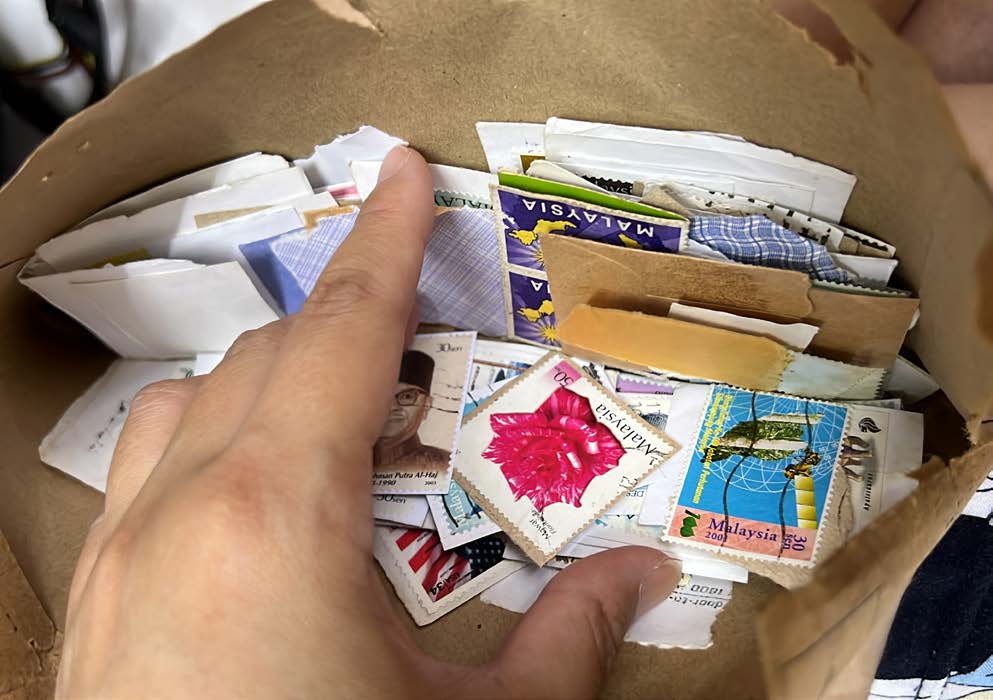
Since I am much older than my sons, I have more collections than they do, but these do not necessarily impress them. Pretty much every former primary classmate of mine had at least one stamp album, so we could exchange stamps or show off to each other. And we had cassette albums by specific artists—not so much CDs, because those were a lot more expensive and difficult to get, growing up as we did in a small town in northern Johor. My sons have no idea what these are. I believe that at one point, I had yarn of different colours, bought from the local handicraft store for a crochet project. I have a small collection of favourite anime merchandise sitting in one corner of my house, which my spouse claims is now collecting dust and doing nothing else. Not to forget the ever-nostalgic McDon-ald’s Happy Meal toys, which caused long weekly queues of buyers attempting to collect Snoopy toys dressed in different countries’ costumes. During a recent spring cleaning exercise, I found my parents’ old collection of coins and notes sitting in a corner that nobody ever thought of touch-ing. A treasure to one, an unimaginable waste of money and effort to the other.
My bigger question is this: why does one start collecting? And why continue or
THE HUMAN NEED TO COLLECT
stop doing so? A quick search on this topic found a lot of studies asking why exactly we collect things. Other than humans, many other animals engage in collecting, like penguins with their rocks and pebbles. Is the desire to possess stuff simply human, or is there another explanation?
Collecting is, by nature, a fairly leisurely pursuit today. But in a prehistoric environment, having the ability to collect and store items was presumably crucial to survival. Early hunter-gatherers would have foraged, hunted and collected food to ensure their survival through unsuccessful hunts. With food stocked up, they could probably spend time making and storing weapons and tools, firewood and flint and the like, for survival. Times may have changed, but the urge to collect has not disappeared. Indeed, we have expanded the range of things that can be collected today. After the essentials come collectibles, which are needed for flexing. Meanwhile, a recent study from the Eller College of Management at the University of Arizona suggests that collecting is driven by the desire for control. There is a psychological need to manage one’s environment, especially during chaotic times. The urge to complete a collection is strong among those who score highly in their desire for control. This simply means that such individuals have a higher likelihood of spending more money or time to try expanding their collections.