
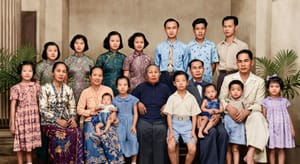
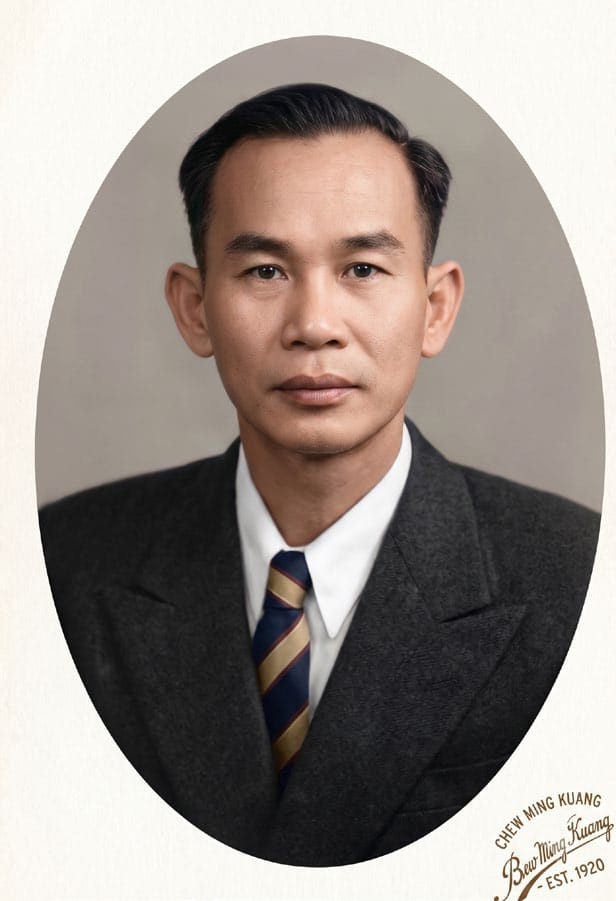
IN A MALAYSIAN cinema hall, the silence is heavy as the credits roll on Lan Hongchun’s 2026 Teochew-dialect film, Dear You (给阿嬷的
情书).[1] Among older viewers, the emotional reaction is visceral; tears pool quietly as they confront a cinematic mirror of their own family histories.
Dear You, produced on a modest budget, became an astronomical sleeper hit in China and the region historically known as “Nanyang” (loosely, Southeast Asia) among the Chinese. Crowds gathered in Kuala Lumpur to meet its cast and director, eager to connect with a story that felt intimately theirs.
There is even a Penang link in the film: its soundtrack features Teresa Teng’s
“Harapanku”, an adaptation of the classic “Nanyang Girl”—written by a Malaysian and inspired by a girl from Penang.
Meanwhile in Singapore, the film’s arrival exposed deep-seated linguistic anxieties: initially, only a Mandarin-dubbed version was approved for commercial release, with the original Teochew version restricted to special screenings. This decision sparked public disappointment and even parliamentary questions about whether or not the rigid suppression of non-Mandarin films remained justifiable. To understand why a seemingly simple family drama has made such an impact across borders, this article unpacks the history of the Teochew diaspora in Southeast Asia more broadly.
A DIASPORIC JOURNEY
We begin with Teochew migration from the Chaoshan region of eastern Guangdong Prov-ince to the shores of British Malaya, Singapore and other parts of the Nanyang such as Siam (Thailand today, where Dear You is mainly set). This voyage, often termed guofan (“crossing the ocean”), was a brutal journey of desperate survival. Driven by ram-pant poverty, social chaos and civil conflict in China, thousands of young men boarded southbound junks with absolutely nothing. Many were classified as sinkeh (“new arrivals”) upon disembarkation, bound by exploitative indentured labour contracts to pay off the cost of passage. In Singapore, holding stations on Pagoda Street, the so-called “Coolie Quarter”, housed these labourers in squalid, overcrowded conditions.
In Malaya, kongsi (clan associations) houses and sprawling clan settlements dominated early colonial trade hubs like Kuala Lumpur, George Town and Ipoh (see Penang Monthly, July 2026). They housed, managed and controlled the indentured labourers who powered the regional tin-mining and port sectors, effectively functioning as self-governing communal hubs. Lodging, ancestral worship and financial lifelines for newly arrived immigrants were available here. Until the abolition of the “Kapitan Cina” system and the introduction of the Chinese Protectorate, the Chinese were effectively outside of colonial governance.