is the Executive Director of Penang Institute. His recent books include The Eurasian Core and its Edges: Dialogues with Wang Gungwu on the History of the World (ISEAS 2016).
WHAT DOES IT mean to be liveable? How should it be distinguished from satisfiability? Does it encourage us to think about what retirement looks like? And what will governance in Penang look like as a result? These are some of the questions that Penang Institute sets out to ask in this article.
In this thought-provoking essay, Dato’ Dr. Ooi Kee Beng reflects on what hobbies reveal about modern life. Exploring ideas of identity, creativity, work and wellbeing, he argues that hobbies are more than pastimes—they are quiet acts of self-definition in an increasingly utilitarian world.
What makes a Penangite is not birthplace, but attachment. In this reflection on identity and belonging, Penang emerges as a place shaped by contradiction—provincial yet cosmopolitan, fragile yet resilient—held together by the people who care enough to claim it as their own.
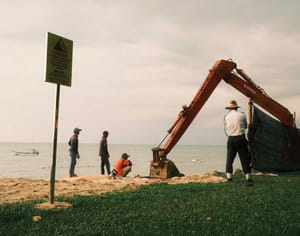
This article highlights the paradox of sustainable development: while necessary, unchecked global “development” risks ecological collapse. Ooi Kee Beng argues this calls for a deeper shift beyond sustainability towards “satisfiability,” focusing on sufficiency, ethics, and collective well-being.
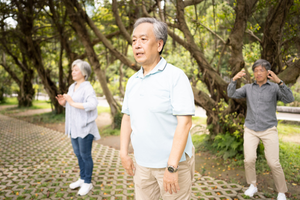
We celebrate active ageing as aspiration and policy goal. But the term hints that growing old means becoming passive. In truth, to age actively is to reclaim initiative—to nurture the inner capacity to act, choose and give meaning.
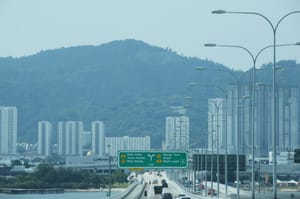
If urban living means that I possess a little space to call home, feel safe in and control, then how much I feel at home in a city would depend very much on how much home-like access I have when out in public.