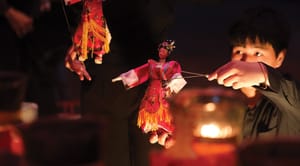
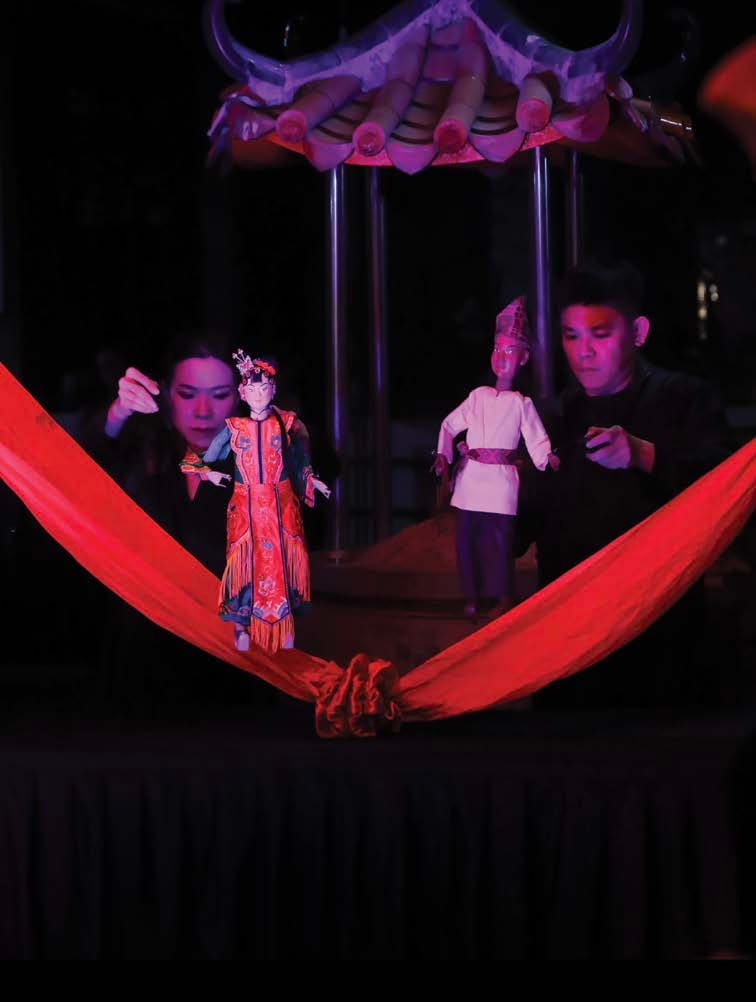
THE FRONT OF the Hor Kai Kong Temple in Pulau Tikus filled with young students and neighbourhood worshippers, as a performance by Ling Goh's Iron Gang Puppet Theatre (铁枝帮) began.[1] Onstage, her students and the musicians performed the Four Fortunes Set (四出连)[2] and reimagined the Malay folktale, Si Tanggang, facing the temple entrance so that the deities could enjoy the show. They were staging a contemporary Teochew iron rod puppet performance on temple grounds for the first time. But it was also an experiment in how modern theatre forms could be injected into traditional puppetry, rather than the other way around. Staged ahead of the 2026 International Performing Arts Symposium & Puppetry Spectacular, Moved to the Temple brought the contemporary back to the site where the form has always lived. By the end of the night, I was asking what the audience thought. And crucially, did the deities like it?
BORN INTO THE TROUPE
Ling Goh is a leading advocate for local Teo-chew opera and puppetry. Her great-grand-father managed an opera troupe, her great-grandmother was an opera actress, and her grandparents were also in the trade. Her mother, Toh Ai Hwa, was thus born into an opera family. Ai Hwa left the trade briefly but returned to work for the Lao Rong Xiu Chun (老荣秀春) troupe, which performed chaoyin (潮音) and puppetry. She took over when its manager died, renaming it the Kim Giak Low Choon (金玉楼春) in 1989. Ling Goh later renamed it the Kim Giak Low Choon Puppet Troupe (金玉楼春潮州木偶剧团). As puppetry gained attention, it became the troupe’s main focus, although its members still perform chaoyin (but have stopped taking funeral engagements). Performance has always been a form of livelihood for them.