
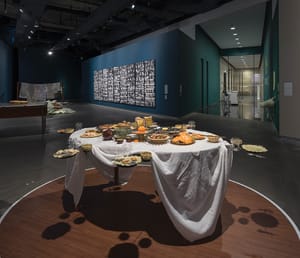
THE ILHAM GALLERY has consolidated its unique position within Malaysia’s cultural landscape by navigating the tensions between private funding and its public-sector mandate. Founded in 2015, the Kuala Lumpur-based space has successfully addressed an institutional gap by prioritising scholarly rigour in the arts over commercial interests. Its first decade can be thought of as a series of deliberate curatorial interventions: characterised by its non-collection strategy, commitment to historical recovery, interrogation of global systems, institutionalisation of experimentation and radical decentralisation. Consequently, ILHAM has fundamentally reshaped contemporary art museums in Southeast Asia by repositioning them not as insular sites of viewership, but as extensible, civic-facing networks for regional discourse and proactive pedagogy instead.
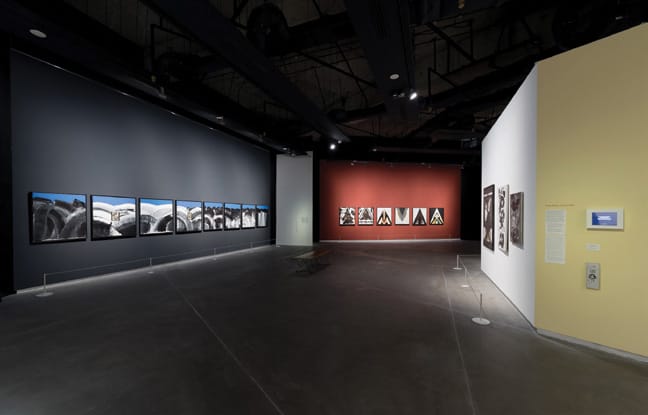
THE “NON-COLLECTION” MANDATE
Globally, private art museums are frequently criticised as “ego-museums”: repositories designed to validate the personal tastes and assets of their founders. Managed by the non-profit Yayasan ILHAM, the gallery deliberately subverted this model at its inception. While maintaining a growing corporate collection, its core operational philosophy is built around a “non-collection” mandate, which seeks the curatorial decoupling of art from capital.
By forgoing the need for a permanent display of its own holdings, ILHAM freed its curatorial team to pursue thematic, research-heavy exhibitions that are not beholden to provenance or market value. This decoupling enables the gallery to operate with flexibility and independence. The result is a decade’s worth of programming that prioritises knowledge-production over the display of objects, thus ensuring that conversations revolve around aesthetic worth, rather than monetary value.
REDRESSING HISTORICAL SILENCES THROUGH CURATORIAL RECOVERY
Another defining characteristic is ILHAM’s commitment to historical recovery. Where the national artistic canon has often been fragmented by shifting political tides or neglect, ILHAM embodies a revisionist force. Its exhibitions are not merely visual surveys, but also scholarly interrogations of the unspoken.
A prime example is 2023’s Nirmala Dutt: Statements. By dedicating significant resources to archival research and a comprehensive publication, ILHAM disrupted the standard exhibition model. Its attempt to canonise Dutt as a pioneer of environmental and sociopolitical installations reflects ILHAM’s broader praxis of using the gallery as a space for historical redress. By highlighting artists whose practices were previously overlooked or undervalued, ILHAM fills a scholarly gap often left behind by underfunded state institutions. In doing so, it contributes to a more inclusive and academically grounded Malaysian art historical record.
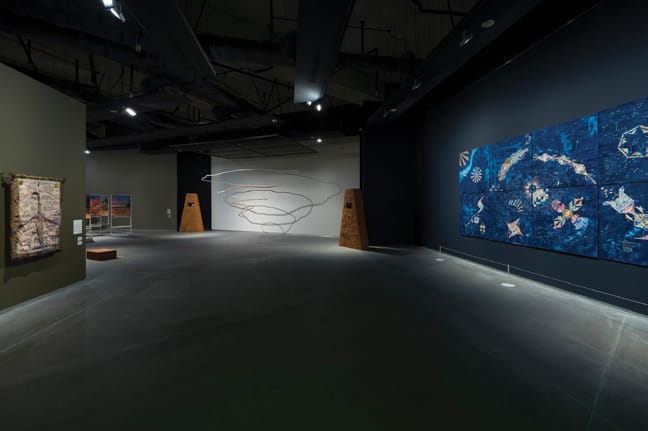
INTERROGATING GLOBAL SYSTEMS
Building upon this historiographical foundation, ILHAM recently pivoted towards expressing Global South solidarity, exemplified by 2025’s The Plantation Plot, a semi-nal collaboration with the global non-profit organisation, KADIST. Curated by Sheau Yun Lim, it deployed a dual etymological framework: the “plot” as both a measured piece of land and the events of a narrative.