
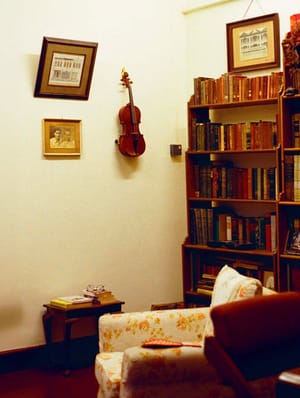
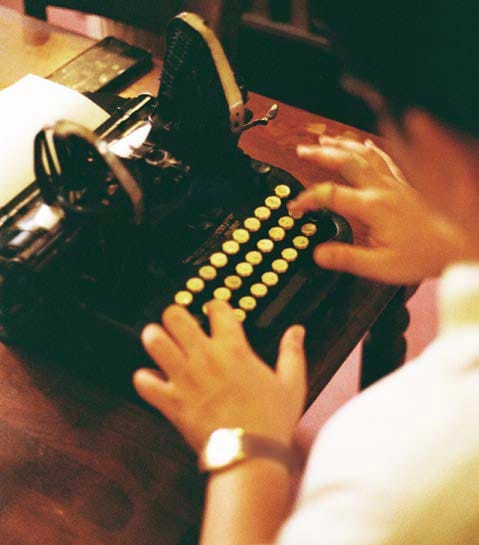
THE SHRILL RING of a vintage doorbell fills the corridor before a small crack in the front door emerges, and Caleb Goh Hern-Ee invites me in. Penang Monthly is here to explore the collection of music, books and media artifacts within. These are the fruits of a personal journey into preserving the memory of how Malay(si)ans used to live. We join Caleb at his latest project—his flat, the Nam Hoe, Setapak, in Kuala Lumpur—a labour of love, toil and self-discovery nine years in the making.
A MUAR BOYHOOD
“I’m in so much debt, I’ll never have financial security,” Caleb joked, partly to stave off the realisation that his beautiful post-war home has cost much more than what is appreciable at first glance. Yet it is impossible not to admire his Setapak flat, which has been home since 2025. “Dating it is hard, but from the research I’ve done, the building was built anytime between 1948 and 1953. It’s one of only four examples of art deco townhouses in Kuala Lumpur. They didn’t build them for that long, and the rest were all torn down.”
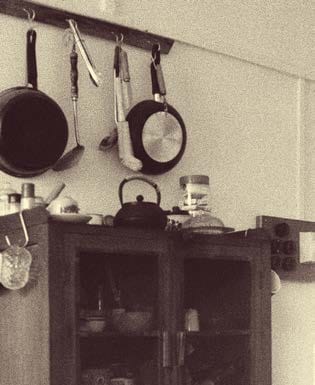
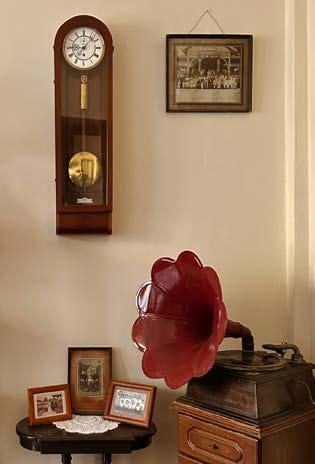
Indeed, much of Malay(si)a’s physical past is frequently left forgotten, replaced by all that is “modern”. “I didn’t want to live in boxes in the sky,” Caleb explained. Thus, the refurbished flat, in both form and function, attempts to accurately represent the grounded, mid-century pursuit of a better life, while engaging with built heritage. When one first steps foot into the flat, their first impression is visceral: of laidback, peaceful domesticity, devoid of pomp or grandeur. It appeals to a warmer, more comforting human desire for a home truly fit for purpose.
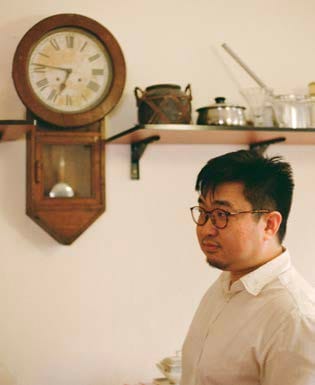
Although prone to distraction, there is always a sparkle in Caleb’s eyes, whether talking about video games or morning joggers. Born and bred in Muar, Caleb’s earliest influences revolve around the very first Nam Hoe: his grandmother’s shophouse in town.
“My family returned the shophouse to the landlord in 2006, but it’s definitely been an influence on the homes I’ve had since. I’ve always tried to recreate that shop-house: the way she lived.”