
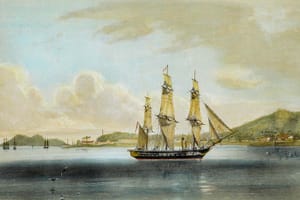
MALACCA, formerly a powerful and glorious city,” observed Captain Auguste-Nicolas Vaillant, “has passed through many vicissitudes... Of her ancient
splendour there remain only ruins; of her past glory only... the debris of fortifications behind which her inhabitants sustained so many memorable sieges... she was no longer a powerful city. Pulo-Pinang and Sincapour [sic] have taken this from her.”[1]
Thus did the French captain reflect on the faded fortunes of the once-legendary emporium as he encountered it in early 1837. Vaillant’s remarks appeared in the official account of his circumnaviga-tion of the world aboard the 800-tonne corvette, La Bonite—a voyage that had begun more than a year ear-lier, on 6 February 1836, when the ship departed Tou-lon and rounded Cape Horn, before proceeding up the Pacific coast of Chile and Peru, crossed the vast ocean to the Hawaiian Islands, and onward to China.
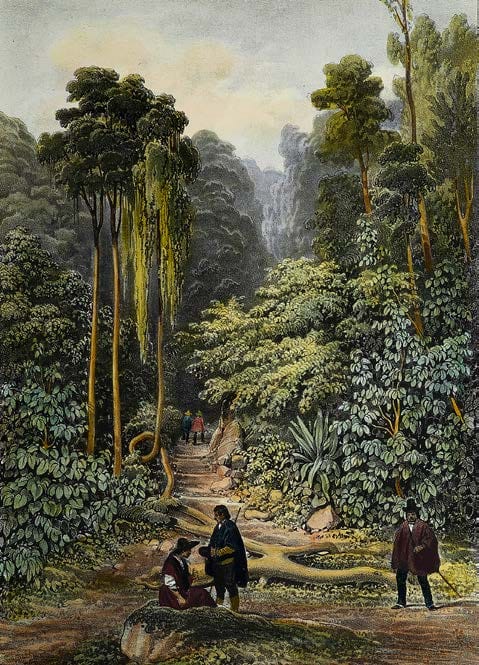
The narrative of this high-seas expedition, however, was not written by Vaillant himself. The French government had originally intended Abel Aubert du Petit-Thouars—later Vice-Admiral—to write the published account, but when he proved unable to undertake the task, the responsibility fell to Achille-Étienne Gigault de la Salle, a senior clerk in the Ministry of the Navy. De la Salle, who had never visited the Straits of Malacca, compiled the text from journals and documents provided to him. The French-born New Zealand historian John Dunmore aptly described his prose as “in keeping with his occupation, somewhat pedestrian”.