
ONE OF THE deepest legacies of colonisation worldwide is the nation-state. Having learned that every inch on earth has to be owned, sooner or later, by some political power, the emergent nation-states, which inherited the territories left behind by crumbling European powers—and Japan—in the 20th century, also cultivated the envy, desperation and fear that had characterised their European models.
National borders became frontlines where flows of goods and peoples could be controlled, counted and tariffed. Other frontlines grew to monitor the flow of capital. This innovation in human organisation meant the erasure of earlier types of flows. But where maritime migration and trade patterns were historically important, things can get very messy, and their consequences hard to chart. And when subsequent settle-ments occur, things get really exciting.
Such spots are a paradise for anthropologists. The intermixing of communities and cultures, coupled with the growth of new trades, professions, cuisines and identities, promises insights into human behaviour in ways that studying a stable society cannot offer. Strangely though, when communities mix, they also become extremely fearful of cultural loss, or what I shall call the chauvinism paradox. This most likely occurs when the communities involved came from faraway places with differing civilisational impulses. Thus, one can expect radical differences in terms of how communities with differing languages, histories and values subsequently get along amidst greater cultural proximity.
This is the case for Penang. While characterised by their high level of tolerance and curiosity, Penang’s constituent communities—which, importantly, are not equally balanced in terms of population size, economic coherence or political prowess—are quite defensive and instinctively proud of their respective ethnic backgrounds.
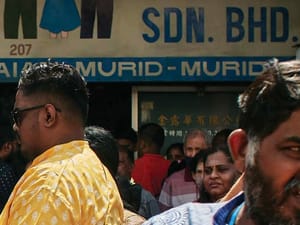
Economic interdependence seems to be the grease enabling communities to come together. At the same time, they feel a need to distinguish themselves from each other, though seldom aggressively. They occasionally megaphone their distinct nature, in accordance with cus-toms developed and maintained over time, largely for this very purpose. There is also a spatial consideration. While we may see places of worship located alongside each other in apparent harmony, we also have urban enclaves that are clearly based on one dominant ethnic component, be this
George Town’s “Little India,” a clan territory or an urban Malay kampung. An apartness remains.
Highlighting The Chauvinism Paradox Through a History of Multiculturalism
by
Dato' Dr. Ooi Kee Beng
Next Post
A Delightful Stay At Rimbun Dahan: A Sidestep Rather Than A Retreat
6 min read
FOR WORKAHOLICS TO drop everything and go on a retreat is as crazy as asking a parent to stop worrying…

You might also like
A Delightful Stay At Rimbun Dahan: A Sidestep Rather Than A Retreat
6 min read
FOR WORKAHOLICS TO drop everything and go on a retreat is as crazy as asking a parent to stop worrying…
How Long Have You Been Here? The Art of Migratory Pregrenations From Bengal
6 min read
NIGHT: At the Hu Yew Seah school, a mural featuring the polymath Rabindranath Tag-ore, who laid its foundation stone,…

TEOCHEW PUPPETRY: DO THE DEITIES APPROVE?
5 min read
THE FRONT OF the Hor Kai Kong Temple in Pulau Tikus filled with young students and neighbourhood worshippers, as a…