
IN RECENT YEARS, the way we talk about pets has shifted noticeably. Once framed as optional companions or accessories to family life, pets—particularly cats and dogs—are now increasingly positioned as emotional anchors, social facilitators and, for some, substitutes for more traditional domestic arrangements. According to a 2023 survey by Standard Insights, Malaysia is seeing a steady rise in pet ownership: 26.4% of the 1,000 respondents say they own multiple pets, while another 26.2% are interested in owning one. Together, these figures suggest not just a trend, but a recalibration of how people imagine companionship and home.
This growing interest does not exist in a vacuum. Firstly, economic pressures have made conventional milestones—home ownership, marriage, raising children—feel increasingly out of reach for many young adults. In this context, pets emerge as a more attainable form of long-term commitment. They offer routine, affection and a sense of responsibility without the financial and emotional weight of sustaining a nuclear family. For some, they also provide a quiet form of security: a presence at home, a reason to return, a living being that structures the day.
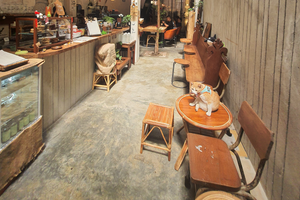
Yet, pets do not exist solely within the private sphere. While they may sleep on our beds and wait by the door, their presence inevitably reshapes how we move through the city. Walks must be taken, energy expended, socialisation encouraged. As a result, pet ownership pulls people outward—away from screens and enclosed interiors—into shared environments where other lives, human and animal alike, intersect.
Room to Roam: How Pets Reshape Public Space
by
Aadah Lee
Previous Post
A Mall is Not a Third Place and-KOMTAR is Not a Mall
10 min read
For many today, KOMTAR is scarcely noticed. Few recall the Great World Park, old cinemas, schools or the kang-a-kiⁿ road that once shaped this part of the city. What was once Penang’s organically grown civic heart has narrowed into a place most visit only every few years—to renew a passport.

Next Post
Project Mars: Growing a Forest to Feed and Educate Us
7 min read
Project Mars hopes to shift how people think about eating—not as something dependent on constant regrowth, but as something already growing around them.

You might also like
Expanding Comfort Zones and Third Places
3 min read
If urban living means that I possess a little space to call home, feel safe in and control, then how much I feel at home in a city would depend very much on how much home-like access I have when out in public.

Penang’s Bookstores Provide Precious Space for Culture and Companionship
5 min read
Across Penang, these reading spaces differ in scale, philosophy and operation. Yet, all share a commitment to something increasingly rare—a space to be.

Third Places, Tropical Rules: How The People of Penang Gather
8 min read
The question today is not just where we gather, but how the rise of air-conditioning, gentrification and ageing society is reshaping the “Penang shophouse” spirit into new, sometimes unrecognisable forms.