
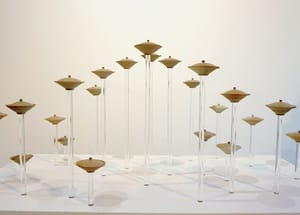
MUSIC AND VISUAL arts share a profound symbiotic relationship, each continually inspiring the another. Composer Modest Mussorgsky, for example, was inspired by paintings to compose Pictures at an Exhibition, while visual artists have long used music as a muse to guide their creative processes. This conceptual linkage led to the Penang Pottery Club’s (PPC) latest exhibition, Adagietto: The Fourth Movement in Clay, at Blank Canvas, which celebrated the club’s 20th anniversary by examining how ceramics—like music—transcend language to stir our latent feelings.
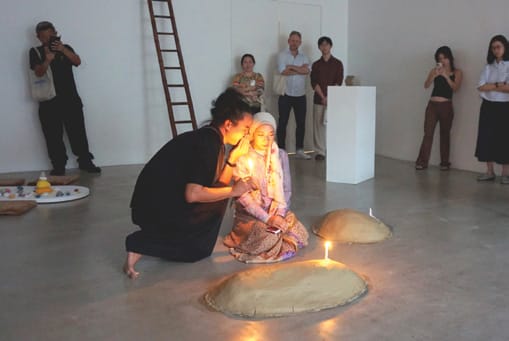
THE LOVE LETTER AS INSPIRATION
The PPC has come a long way since it was founded in 2006 by a small group of Japanese ceramicists who wanted to nurture a community for ceramic arts in George Town. Its first public exhibition, Earthly Investigations, held at Penang Institute in 2022, formally defined the club’s Dao Shang Shao (“Island Firing”) philosophy. This unique Zen-based movement creates a distinct, modern identity for Penang-style pottery by using local materials, both for the raw clay bodies and to fuel its dual gas- and wood-fired kilns.
The fourth movement from Austrian-Bohemian composer Gustav Mahler’s Symphony No. 5, which was composed as a “love letter” during the courtship of his future wife, Alma Schindler, served as the core inspiration for this exhibition. Written without text, this movement is famous for its gentle, rolling harmonies of strings and harp. These melodies represent the breaths, pauses and air between speech, expressing emotions otherwise impossible to capture in words. Taking cues from Mahler’s enigmatic piece, this exhibition brought together five diverse artists whose experimentations evoked specific emotions and moods using texture, glazing colours and the physical forms of both fired and unfired ceramics.
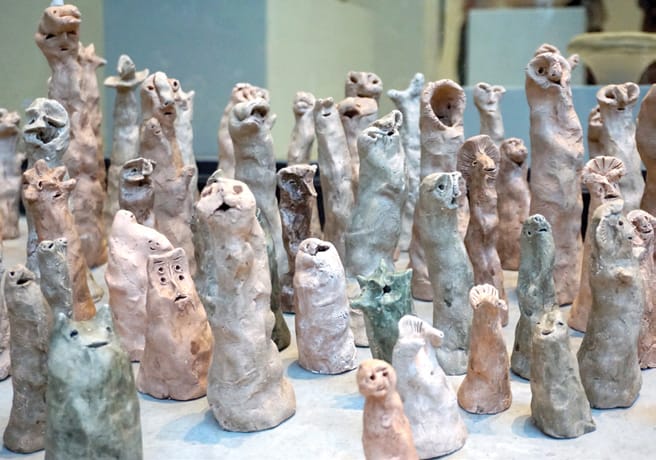
Adagietto demonstrated how clay, in the hands of skilled artists, can speak of complex relationships, abstract emotions and inner insecurities. Together, they can present the act of confronting one’s truest, darkest self, while transforming inner turmoil into something beautiful. The exhibition invited viewers to reflect and draw deeply on their own experiences to find moments of shared vulnerability with the art pieces.