
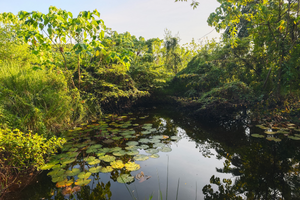
AT FIRST GLANCE, Project Mars does not look like what most people would recognise as a farm. There are no neat rows of vegetables, no mono-cropped plots stretching toward the horizon. Instead, there is a dense layering of plants—bananas, cacao, bamboo, medicinal herbs, trees at different heights and ages—interwoven into something that feels closer to a forest than an agricultural site.
That is precisely its point.
Project Mars, located in Balik Pulau, Penang, is a climate action initiative that began nearly a decade ago as a response to something its founders could no longer ignore: the land was changing, and conventional farming was no longer enough.
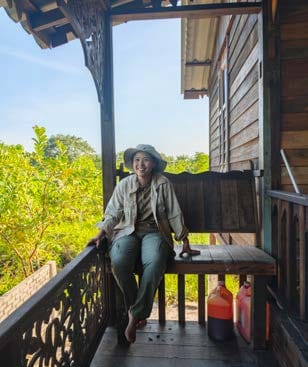
Chee Hoy Yee and her husband, Pop, are no strangers to farming. Founders of Pop & Chee Healthy Home Farming (featured in the October 2021 and December 2017 issues), they have been active in the sustainable farming scene for over a decade now. Long before Project Mars took shape, the couple had already been advocating for home-scale food production, soil health, and ecological awareness, grounding their work in education and hands-on learning rather than yield alone.
“Along our journey, we became aware that the weather was becoming more and more extreme,” Hoy Yee, Project Mars’ co-founder explains. “We realised we were no longer able to grow things that used to grow easily.”
Crops such as lettuce and radishes, once reliable, began failing under erratic rainfall and rising temperatures. Too much rain caused vegetables to rot; prolonged heat stressed young plants. Some years brought massive crop losses. Other years saw harvests come all at once, collapsing prices because everyone was harvesting the same thing at the same time.
“It’s either too much or too little,” she says. “That’s the problem.”
Rather than pushing harder against increasingly unpredictable conditions, Project Mars chose another path: learning to read the land, adapt to it, and design a system resilient enough to survive what lies ahead.
FROM ABANDONED PLANTATION TO FOOD FOREST
Project Mars describes itself as a food for-est—an idea that often needs explanation.
“In a forest, nobody fertilises the land,” Hoy Yee clarifies. “Nobody tills the soil, but everything grows well.”
A food forest applies this principle intentionally. Instead of focusing on single crops, it layers edible plants, medicinal herbs and useful species—like bamboo for building—into a self-supporting ecosystem. Each plant is chosen for multiple functions: food, shelter, soil improvement, shade or habitat.
The land that Project Mars now occupies was once an oil palm plantation, abandoned for over 15 years. Flood-prone and degraded, it was hardly ideal farmland. But where others saw exhaustion, Hoy Yee and Pop saw possibility.
Inspired by a visit to a syntropic agro-forestry project in Johor—A Little Wild, a 138-acre farm—they saw how degraded land could be revived into a productive ecosystem within a few years. If it could be done there, perhaps it could be done here too.
The method used—syntropic agroforestry—is an approach that considers sunlight needs, growth timelines and plant characteristics together. Fast-growing plants, medium-term crops and long-living trees are planted at the same time, allowing them to support each other as the system matures.
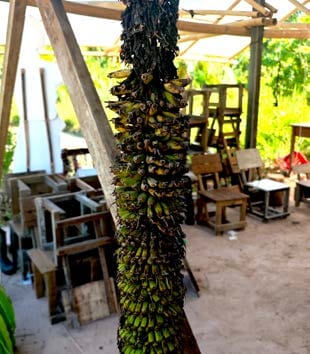
“You plant once,” she says. “Then you just manage by pruning. Less labour, less intervention.”
The result is a largely self-sustaining system that continues producing food without constant replanting or soil disturbance.
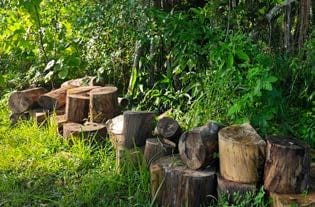
Three years ago, Project Mars began restoring the site. Flood mitigation canals were designed first, followed by careful clearing of old oil palms. Some palms were deliberately left standing; others were chopped and composted on-site to return nutrients to the soil.
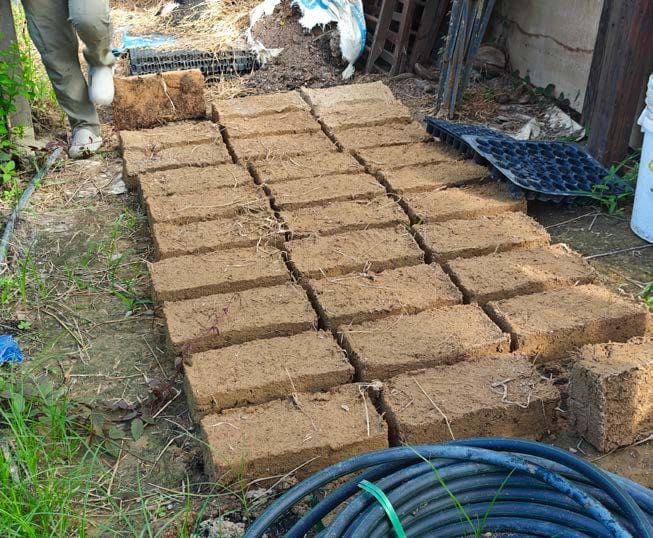
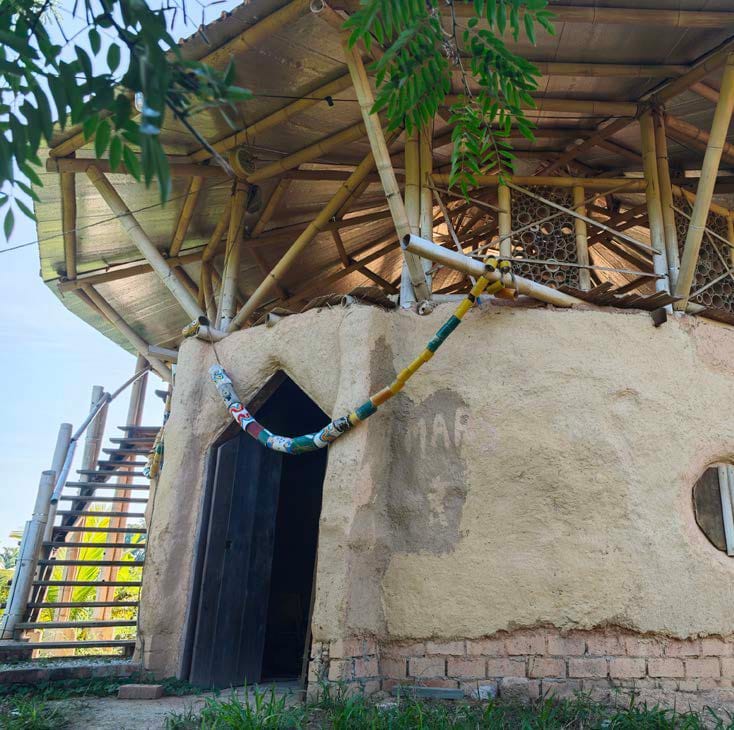
Obtaining materials from outside of Balik Pulau was avoided where possible to save costs. Goat dung was sourced from a nearby farm. Building materials came from the surrounding area. Labour came almost entirely from volunteers—children, adults and elderly community members working together.
“This has always been a community-based project,” she beams.
WHY MOST FARMS DON’T WORK THIS WAY
If food forests are so resilient, why aren’t they more common?
The answer, according to Hoy Yee, lies in scale and expectations.
Commercial farms are production-focused. They need predictable yields, uniform sizes and specific harvest windows. Markets demand bananas of a certain taste, vegetables of a certain shape and fruit at a certain time.
“Nature doesn’t work like that,” she says. “The forest fruits when it’s ready.”
sises perennial and forest-based foods that regenerate naturally and protect soil health.
“Vegetable farming interrupts the soil again and again,” she explains. “We don’t do that here.”
Walking through Project Mars, visitors are likely to encounter unfamiliar varieties—rare bananas, little-known fruits, medicinal leaves and plants many people have never seen or eaten.
“We prioritise things that people don’t want to grow anymore,” she quips. “Because they can’t sell them.”
There are at least 10 varieties of banana on-site, including rare types that are slowly disappearing from cultivation. The same approach applies to fruit trees—durian varieties that are unfashionable, plants few people recognise, species that have quietly slipped out of mainstream diets.
“This is about preservation,” she says. “And education.”
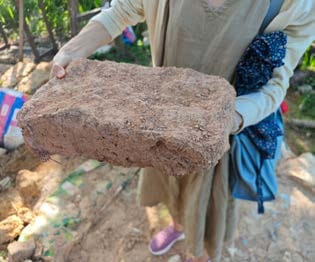
Education, in fact, funds Project Mars. Workshops range from mud-brick construction and insect identification to forest design, off-grid solar systems and community resilience planning. Schools, universities, corporates and community groups book private sessions, often bringing dozens of participants at a time.
“We don’t build unless we have the funds,” she expands. “And the funds come from teaching or donations.”
A solar workshop, for example, paid for the installation of the farm’s off-grid solar system. Insect identification sessions contribute to biodiversity monitoring while teaching participants how to observe ecosystems responsibly.
“It’s always an exchange—knowledge for support.”
LEARNING TO LIVE WITH ADVERSE CLIMATE EVENTS
Flooding and heatwaves are no longer a distant threat in Penang and Malaysia—these are already happening. During recent floods in December, water submerged the land for nearly two weeks. Some plants died. Others survived.
Biodiversity, Hoy Yee argues, is real food security. When climate stress affects one species, another may still thrive. Genetic diversity within the same crop—rather than identical clones—means floods or heatwaves are less likely to wipe out everything at once.
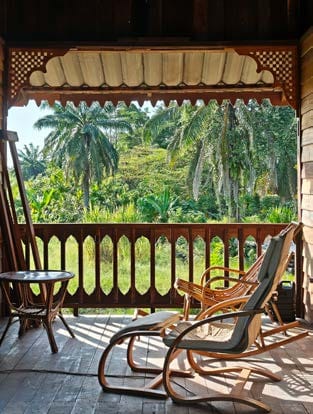
Plants at Project Mars are not protected from flooding; they are trained to endure it. Over time, species that survive high water tables, saline conditions and marine clay soils are replanted and their seeds shared.
“If they survive flooding, that resilience becomes part of their genetics,” she explains.
Observations—such as about which plants survive at different ages, or how long they can tolerate waterlogged soil—inform future planting decisions. While the project does not have the resources for full scientific trials, it collects practical data through experience, observation and shared learning.
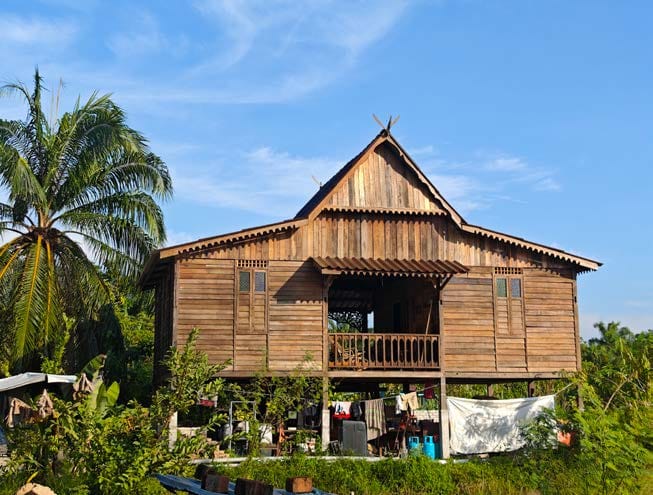
Part of the knowledge Hoy Yee and Pop impart in their workshop participants is also knowing when a forest is becoming self-sustaining.
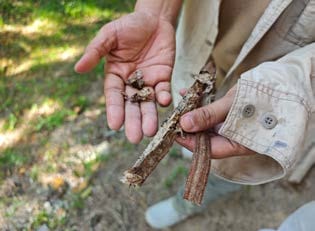
Hoy Yee says the biodiversity of insects in the food forest is a good prepredictoric-tor. An increase in pollinators, birds and diverse insect life signals balance. If a plant is excessively eaten, it suggests an ecosys-tem still out of balance. Healthy forests show variety—not just in plants, but in the creatures that depend on them.
Birds, frogs, dragonflies and bees have all returned to the once-barren land Proj-ect Mars is built on. Their presence forms a visible food chain—one that visitors learn to recognise through guided observation.
A MODEL, NOT A SOLUTION
Project Mars does not claim to be the answer to climate change. Hoy Yee is clear about that. “We are not policymakers,” she says. “We can only do what we can.”
What the project offers is a model—proof that degraded land can be restored, that food systems can adapt and that communities can prepare themselves.
The project’s next step is a forest-to-table café concept—introducing people to forest-based foods that are nutritious, resilient and flood-tolerant.
“When floods come, your bok choy is gone,” she says. “But the moringa tree is still here.”
By reintroducing forgotten and less popular leaves, shoots and perennial foods into our diets, Project Mars hopes to shift how people think about eating—not as something dependent on constant regrowth, but as something already growing around them.
In a future defined by uncertainty, Project Mars is not trying to predict what will happen next. It is simply growing the capacity to endure—and teaching others to do the same.