
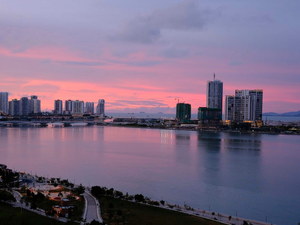
THIS ISSUE HIGHLIGHTS liveability in Penang, and an initial word of warning is in order. A particular kind of misleading confidence comes from a spreadsheet. Ask a town planner what makes a city liveable, and you will be handed numbers: walkability scores, transit access, density targets, hectares of green space per resident. These are not unimportant, but they only describe a city’s skeleton, not its temperament. And a city, like a person, is not reducible to its bone structure.
What I want to do here is walk through what gets left out when we let a checklist do our thinking for us—and why the disciplines that study meaning, rather than infrastructure, need to be heard.
Start with something modest: the idea of place. Marc Augé distinguishes between “place”—saturated with memory and relationality—and “non-place”—functional, anonymous and interchangeable. A city can be efficient in every measurable sense and still produce non-places: the mall corridor, the transit interchange, the plaza nobody remembers. What transforms ordinary geography into something people actually love is repetition, whether from the same walk, seeing the same stallholders or nods exchanged each morning. This is not nostalgia; it is how meaning accrues, which in the case of George Town, emerges from its living heritage and street life.
The corner coffee shop, the barber-shop and the void deck are examples of what American sociologist Ray Oldenburg calls “third places”. Neither home nor the workplace, these are where casual and low-stakes contact between people actually happens. A planner might tick the box that says an amenity exists within a radius of 500m; but this is a different achievement from inviting people to linger (see Penang Monthly, February 2026).
CONDITIONS FOR RELAXING
Environmental psychologists bring a more physiological argument to the table. Rachel and Stephen Kaplan’s Attention Restoration Theory proposes that the mind, fatigued by the demands of urban life, needs exposure to environments of
“soft fascination”—for example, greenery, water or the gentle complexity of a gar-den—to recover. This is not an aesthetic preference, but hews closer to a biologi-cal requirement. Colin Ellard’s work measures this need directly. Blank façades and relentless visual monotony produce quantifiable stress responses, as does the opposite extreme: chaotic overstimulation. The live-able street, it seems, lives in a narrow band between dullness and onslaught.
And then there is the older, more intuitive observation that streets feel safe not because of statistics, but because of “eyes”, in the sense that someone, somewhere, is paying quiet attention. Oscar Newman’s concept of “defensible space” argues that the legible ownership of a courtyard or stairwell changes how people behave within it. A place can be statistically safe yet feel unsafe, simply because no one appears to be responsible for governance and management. The gap between the two is where a great deal of urban anxiety quietly lives. Sadly, the prevalent culture in Penang, and Malaysia at large, is one of bad maintenance, where public spaces actually cause “urban anxiety”, thus detracting from their levels of liveability.