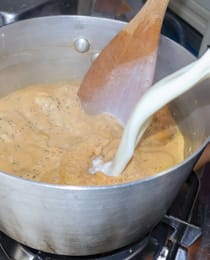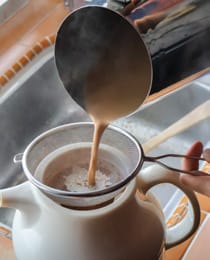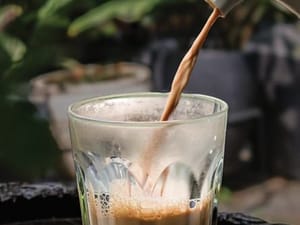
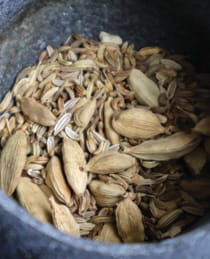
GROWING UP, warm balmy Sundays meant sleepy drives across states to visit aunties and uncles living in northern Peninsular Malaysia. These visits meant smatterings of words, both familiar and foreign to my ears, and homemade chapati and saag (a mix of spices and leafy mustard greens or spinach). Almost always, they ended with a whole-some jug of spiced milk tea that we call cha, to remedy the lull of the sleepy after-noon. Fatigue often took the reins, but no one refused a cup. Who would—and why? Still, Punjabi cha—more commonly known as masala chai—was something I avoided as a child who preferred things sweet. Today, the smell wafting through the kitchen is all I look forward to in the mornings.
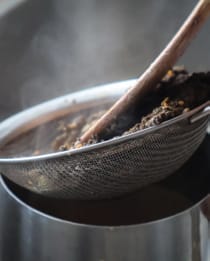
In Penang, we know our hot drinks. Some of us are very picky about the beverage that stirs us awake at the crack of dawn. We have opinions about our kopi (in all its forms) and teh tarik (how strong or sweet we want it), and we are aware of expensive new beverage outlets. But for me, there is something different about cha: no one should claim to have the best version or serve it expensively. Cha is nostalgic, warming and familiar, at least to me, and perhaps many people of diasporic Indian1 heritage.