
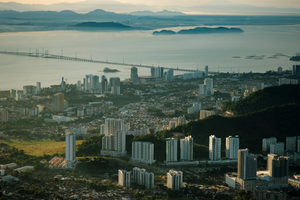
THE HAKKAS (客家), also known in Hok-kien as the Khek-lang, are one branch of the Han Chinese people. The term refers a group that migrated down to southern China quite late in history,[1] and settled mainly in the provinces of Guangdong and Fujian, with a smaller number in Guangxi. This article offers a glimpse of this com-munity in George Town, through the lens of the Penang Hakka Association.
THE EARLY TRACES
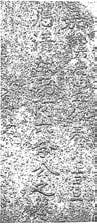
Given the lack of historical records, it is difficult to know exactly when the Hak-kas first arrived in George Town. A tombstone belonging to Li Ah Liu (李阿六) from Jiaying Prefecture, dated 1799, stands at the Mount Erskine Cemetery,[2] generally believed to be one of the earliest Hakka tombstones in Penang.
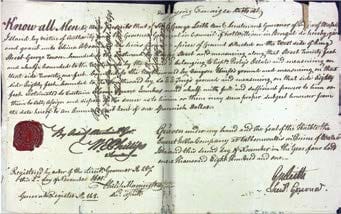
As for Hakka associations in George Town, the earliest was likely the Kar Yin Fee Kon (槟榔屿嘉应会馆). In 1801, Sir George Leith, lieutenant-governor of the Prince of Wales Island, gifted a piece of land on King Street to the association. The neighbouring Tsen Lung Fui Kon (槟城增龙会馆) was apparently already established at that time; its name is marked to the north of the land grant to Kar Yin Fee Kon.[3]
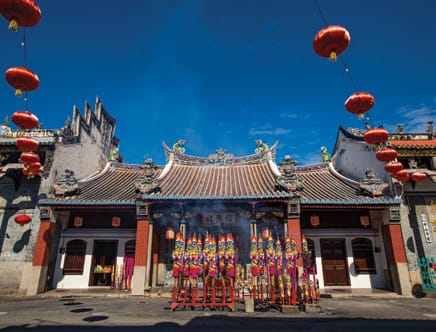
After the 19th century, as the Hakka population continued to grow, many more associations were established, including the Fooi Chew Association, Pertubu-han Yung Ting Utara Semenanjung and the Persatuan Taipu Pulau Pinang. Other organisations closely linked to the Hakka community also emerged, such as the Thai Pak Koong (Ng Suk) Temple. Many remain active today.
THE ESTABLISHMENT OF THE PENANG HAKKA ASSOCIATION
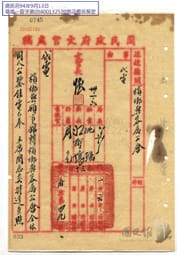
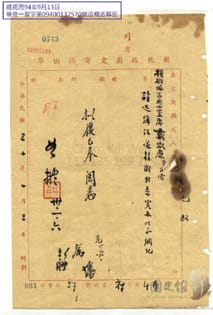
In 1939, the Nanyang Khek Community Guild was founded in Singapore, with a branch established in Penang soon after.[4] The Japanese occupation followed, and few records from that period survived to this day. Existing documents do show that then-Chairman Dai Shuyuan (戴淑原) wrote to the Kuomintang government, reflecting the community’s close concern with the wartime situation in China.
In the postwar period, the Penang association resumed operations, but as times changed, so too did its identity and activities. After the Communist Party of China came to power in 1949, contact between Malaya and China became much more difficult. Furthermore, when Malaya gained independence in 1957, local Chinese communities began paying more attention to their new country. These changes were reflected in local activities, many of which were well documented in the Sin Chew Jit Poh. On 23 September 1953, the Penang Hakka Association was reported to have actively donated funds for the establishment of Nanyang University: the first Chinese university in Southeast Asia. On 11 March 1956, the newspaper reported that the Association’s board had agreed to assist the government in recruiting ethnic Chinese policemen. Compared with the prewar period, the Association was clearly becoming more concerned with local developments.
THE ASSOCIATION’S EFFORTS AT CULTURAL PRESERVATION
Although the Hakkas are not a large com-munity in George Town or Penang at large, they still left behind a clear historical presence. Recent efforts to preserve and promote Hakka history and culture demonstrate how the community changed with the times.
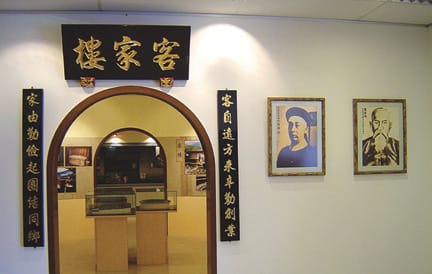
In 2006, the Association established Malaysia’s first Hakka Heritage Museum. It hopes for the museum to be a starting point for collecting and preserving the community’s cultural heritage nationwide. In 2012, the Tan Sri Wong Pow Nee Memorial Hall—named for Penang’s first chief minister, himself a Hakka and whose appointment was therefore a point of communal pride—was established at the museum. The museum now serves as an important venue for welcoming local and overseas visitors alike.
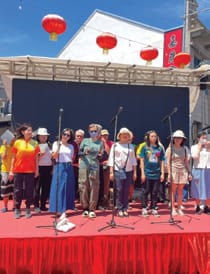
The Association also formed a choir in 2017 with the aim of preserving the Hakka language and promoting singing and cultural activities. It welcomes not only Hakka members, but also those of different dialect groups with a shared interest in singing. The choir has even performed at the Penang Miaohui celebration. According to youth chief Stanley Yew, the Association has started providing basic Hakka language classes and even published a self-learning handbook in 2020.
More than a century has passed. Yet the Penang Hakka Association and other such organisations remain active today.
ENDNOTES
- Iijima, N., et al.
(2021). Hakka: History, Culture, and Impressions (trans. Chou C.-y.). Hakka Affairs Council. - Franke, W., & Chen, T. (eds.). (1982). Chinese Epigraphic Materials in Malaysia (Vol. 2). University of Malaya
Press. (p. 685) - Persatuan Kar Yin Fee Kon Pulau Pinang. (2026). The Minutes of Penang Kar Yin Fee Kon Association Meeting (vol. 2). (p. 52).
- Nanyang Siang Pau.(1939, January 16). “梹城客屬分會選出籌委
廿九名”[Twenty-Nine Committee Members Elected for Nanyang Khek Community Guild’s Penang Branch]. National Library Board Singapore Archives. (p. 15)