
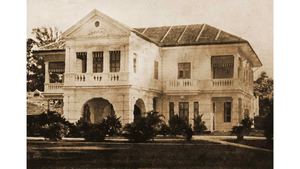
THE BROADCAST UNIT crackled against the humidity. “Testing, one, two, three... Can everybody hear me?” None of the participants could. We were gathered beneath the frangipani trees on the morning of 7 December for a heritage walk, organised in conjunction with the George Town Literary Festival. On my third attempt, the unit cooperated, and we began walking westwards from the Old Protestant Cemetery. Around us, weathered tombstones marked where the town once ended. Beyond them stretched what maps now call Jalan Sultan Ahmad Shah, but which memory still calls Northam Road.
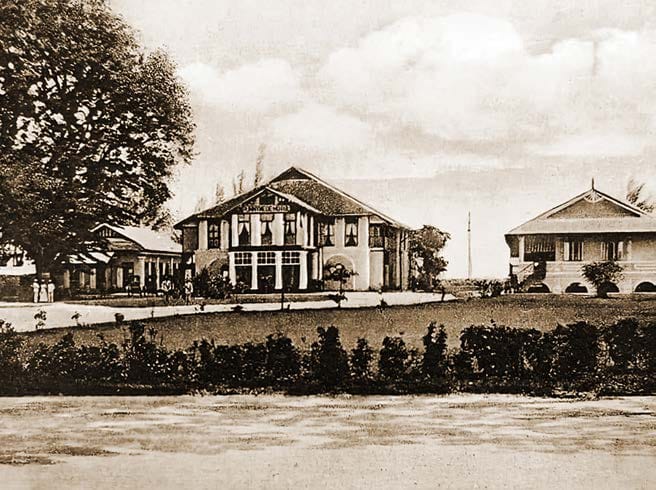
The gloriously fine weather mercifully held, despite threatening skies the day before. Remarkably, it was also 216 years to the day the East India Company approved the construction of the very road we were about to traverse. Our walk followed both geography and chronology, with each building along the road marking a moment in the city’s evolution. From this point on, the road would stretch northwest along the beachfront towards what we now call Gurney Drive, accumulating mansions, millionaires and meanings as it extended. Before this road was built, only a bridle path ran past coconut palms located beyond the cemetery, offering views across the strait to Kedah Peak—Gunung Jerai—rising blue in the distance. And what began as a beachfront retreat for Company officials would become the address of choice for Penang’s wealthiest Chinese towkays, earning this stretch its enduring nickname of “Millionaires’ Row”. People have been asking me to write up stories from these walks, and so here are some selected tales.
RUNNYMEDE
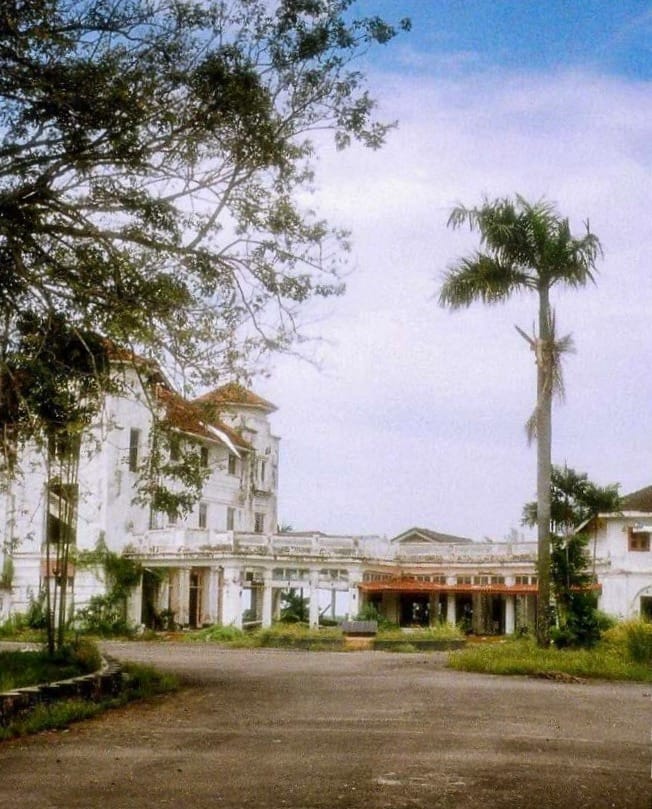
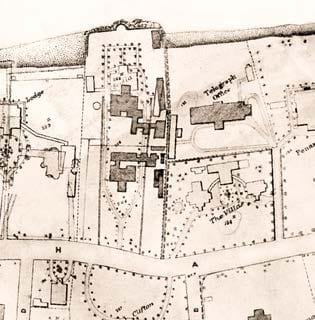
The 1809 meeting which approved the construction of this road along the north beach was recorded by a certain Thomas Stamford Raffles, then just a young assistant secretary in Penang. He had recently completed building a house along the proposed route, named Runnymede after the meadow where the Magna Carta was signed. Whether construction was motivated by public benefit or personal convenience remains ambiguous. On Wednesday, 3 August 1808, Olivia Devenish Raffles wrote to a family friend, Dr. John Leyden, that, “Mr. R. is building a pretty brick house on the beach, which I hope will be finished in eight to ten weeks.” The Prince of Wales Island Gazette of 14 January 1809 later reported: “The north beach will, ere long, assume a very handsome appearance, when the several elegant villas now building, are finished.” One such villa directly west of Raffles’ property was Sans Souci (French for “without worry”), belonging to John James Erskine, a colleague and friend. From their beachfront properties, Olivia and Erskine could each see their namesake hills across the Great Bay: Mount Olivia and Mount Erskine (now Pearl Hill). But both Sans Souci and the original Runnymede are long gone. The latter burnt down in the early twentieth century, and its final traces were destroyed around a decade ago.