

WHEN WE TALK about the pursuit of ambition, cities—from KL to George Town and Singapore—tend to dominate the conversation. The result is a “brain drain”, where talent departs smaller towns for the opportunities concentrated in urban centres. The success story is a familiar one: to grow and succeed, you need to leave home. But the reverse experiences of four young people complicate this narrative, whose moves away from cities were shaped by work and familial circumstances, whether deliberate or unexpected. In each case, their newfound careers in villages and small towns now offer them space to grow differently, quietly and intentionally.


KAMPUNG BASUNG, TERENGGANU
Diyana Germani moved to Kampung Basung when she was 28. Now in her early 30s, she works in wildcat conservation alongside a K9 unit. Her days are spent in the forest with Phiri, her animal partner, moving through dense undergrowth, up steep hills, along rivers and elephant trails. She laughed upon recalling the messiness of these treks. “Elephant dung, leech bites, more mud than I imagined—but it’s part of the process. You plan, adapt and move forward. Every day teaches [you] something new.”
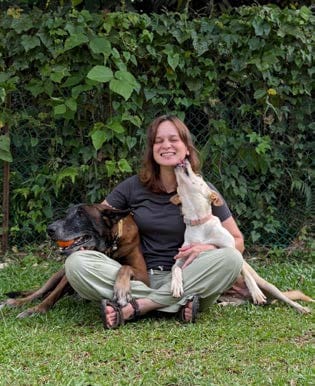
She had previously spent years in the media industry after moving to Penang at 19. “It was fast-paced and demanding,” she recalled, “but I realised it wasn’t where I saw myself [in the] long-term.” Meanwhile, her connection to animals had always been part of her life. “My first dog came home when I was 11,” she recalled. “Over time, we had five dogs and three cats. All rescued. Caring for them wasn’t optional, it shaped my days and taught me responsibility.” When an opening for her current role appeared, life in a small village was not one of the draws. Moving here meant that the nearest supermarket and veterinary clinic would be an hour away, with her family several hours distant. “There are moments you feel the distance,” she admitted. “But I’ve never really felt alone. Phiri keeps me company, and my colleagues share the same purpose. Being here gives me clarity.”
On moving to Kampung Basung, she reflected: “Decisions were never framed around leaving or staying in a particular place, but around where I felt I could do meaningful work. Only in hindsight do people interpret it as stepping away from opportunities. For me, the location followed the work, not the other way around.”
CHERATING, PAHANG
Shafiq, also known as Stu, found his own rhythm in Cherating. A trained engineer, he left his full-time job to explore the creative industry, specifically in modelling and acting. While freelancing, he started part-time work as a barista, moved up to managing a café, and now runs his own outfit, Which Corner Shop, near the beach. His reason for moving? “Mainly because of surfing,” he said, “it has been my dream to have a small café by the beach.” He described the town simply as follows.
“The place is a gem. Everyone lives a slow life.” Mornings begin with the sea breeze and coffee, afternoons with customers hanging out at the café and evenings with the melody of waves in the background. On leaving the city, he explained that, “I see it a bit differently. I feel like wherever you are, there’s always an opportunity. It’s more about how you choose to grow and contribute, rather than where you go.” The trade-offs were a greater distance from family and friends, but the town offers the pace and relationships he had hoped for. “People return. They linger. Growth isn’t always loud: sometimes it’s steady and quiet.”
I think about the patience involved in brewing a good cup of tea, by letting its flavors develop slowly. So too is Stu’s life in Cherating similarly measured, and tasted through small, meaningful moments.
BALING, KEDAH
Sheera, 33, had been running her fashion brand, Sekuntom, from Kuala Lumpur, but after her brother passed away, her priorities shifted. “I wanted to be closer to my parents [in Baling],” she said. “Family felt more urgent than anything else.”
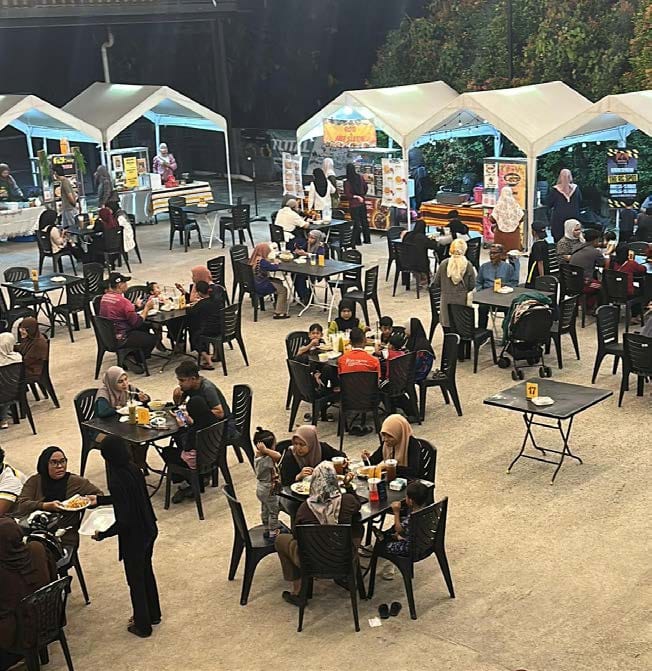
She paused work on her brand, and started a local food court called Kenduri Town. “At first, it felt very different from fashion,” she admitted. “But managing people, building a space, it’s still about creating experiences.” This involved adapting to the market’s bustle, the aroma of local dishes and the way that neighbours stop to chat. “It’s not glamorous, and it doesn’t try to be. But it feels honest and for where I am in life, it feels right,” she added.
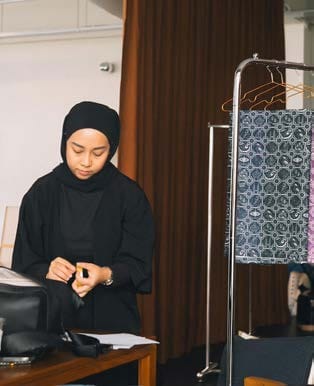
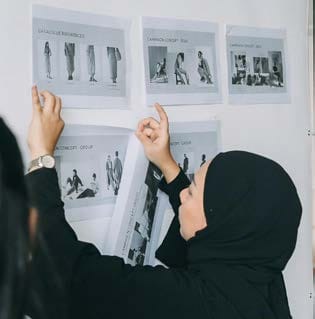
The trade-offs were noticeable: less visibility, a slower pace and smaller market. But the move offered steadiness and connection she could not have found in the city. “I understand why people might see it [the move] as a loss. But my creativity, skills and experience didn’t disappear. They simply took a different form. Growth doesn’t always mean moving upwards or outwards; sometimes it means moving inwards and closer to home.”
BALIK PULAU, PENANG

In Balik Pulau, ceramics artist Thanesh Kichi also found space to grow. Originally from Klang, he set up Seramitha Studio with support from Kraftangan Malaysia. “People worry when you move to a smaller town,” he said. “They think your opportunities will shrink.” He had those worries too at first, particularly around income, exposure and sustainability. But over time, the town’s calm pace became part of his artistic practice. “It allowed me to focus, to refine my work,” he said. The local community values his handmade ceramics, and costs are now more manageable.
From my visits to Balik Pulau, I remember soft sunlight over the hills, the scent of earth and sea mingling as well as small streets lined with fruit trees. Thanesh’s daily routine includes kneading clay, shaping forms and walking the surrounding countryside for inspiration, engaging in a quiet cycle of creation. Watching Thanesh work in this environment, it is clear how space and environment shape his craft and days. For him, leaving “depends very much on individual interests and personal goals. I chose to live far from my family because of my ambition to become a full-time artist. There were sacrifices, yes, but sometimes you have to let go of comforts to grow and pursue what truly matters.”
Having heard these four stories, it is clear that not every move to quieter environments is planned, and not every reset is a choice. Sometimes, life nudges people into change, with varying, and sometimes positive, results. Talent and opportunity do not automatically disappear when someone steps away from a city. They adjust to novel surroundings and find a new home.
The geography of ambition is not limited to skyscrapers or crowded streets. It can be charted in forests, cafés by the sea, family-run spaces and quiet studios alike, unfolding without spectacle while becoming deeply rooted.