Ko-Tai Penang was the final act in a trilogy of community street performances directed and produced by Ombak Ombak ARTStudio which showcased historical events from Penang and the nation's history from Merdeka to the present day.
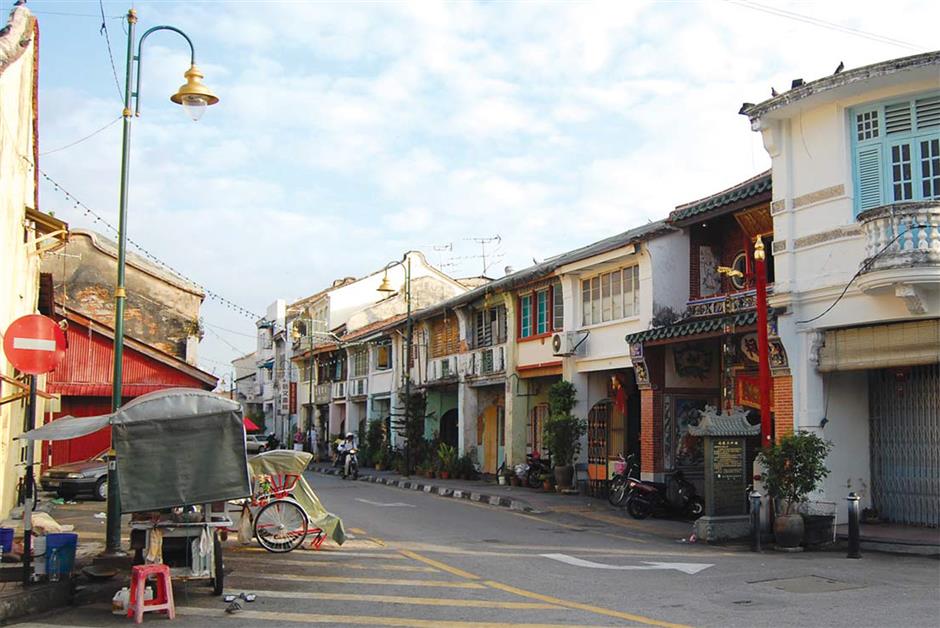
ON HIS ARRIVAL in 1786, Captain Francis Light, the founder of the British trading post on Penang Island, laid out the original grid of George Town as we know it...
WHAT IS HEARTBREAKING about the current economic crisis, caused by the collapse of key financial institutions in the West, is that the culprits are seldom the victims.
In 1885, the Chinese-owned Khean Guan Insurance Company was established in Penang. This was in response to the growing number of Western insurance companies operating in the city in the final decades of the 19th century.
For the distant traveler, Penang is unique to the region. It is not like Phuket or Pulau Perhentian where sun, surf and sea are the attractions, or like Kuala Lumpur or Singapore, where urban life pulsates late into the night. Penang is somewhere in-between.
The Malaysian seafood industry is widely recognised as world-class, with exports valued at RM2.5bil in 2007. However, the situation changed suddenly when Malaysian authorities decided on a self-imposed ban on exports to the EU.
Since the 1970s, Penang has seen itself as an industrial centre for the country. What are the jobs they create, and how many? And do our industries differ in significant ways from those found in other parts of the country?
Penang has gone from being one of Asia’s most important metropolises to being an increasingly insignificant part of Malaysia. In that, it painfully reflects the fate of the country’s politics.
THE MALAYSIAN ECONOMY is at a crossroads; it has stopped being a high growth economy and is no longer a low-cost centre. Furthermore, the global economy is a very different creature compared to what it was just two years ago, before the financial crisis shook the world.