
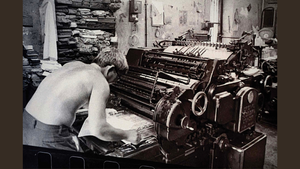
I WAS FLÂNEURING among artisanal traders along the streets and alleys of George Town in 1996, with a Leica R firmly strapped to my hand. Even then, it felt like stepping back in time. The narrow and busy streets hummed with the sound of traffic and rhythms of artisanal tradesmen. This was before UNESCO’s 2008 World Heritage Site inscription, when many heritage crafts were still operating in their original shophouses. However, they were already under pressure from rising rents and modernisation. My experience then was as much about showing presence, as it was about capturing valued and dying lifestyles. Shooting with my Leica was a rewarding experience. The manual camera’s tactile controls and optical clarity encouraged a slower and more deliberate approach; one which matched the unhurried pace of the artisans themselves. Revisiting these images three decades later, they bring back memories of the roar of the blacksmith’s fire coupled with the clink of his hammer, or the quiet focus of the basket-weaver, pulling strands of rattan with his skilled fingers.
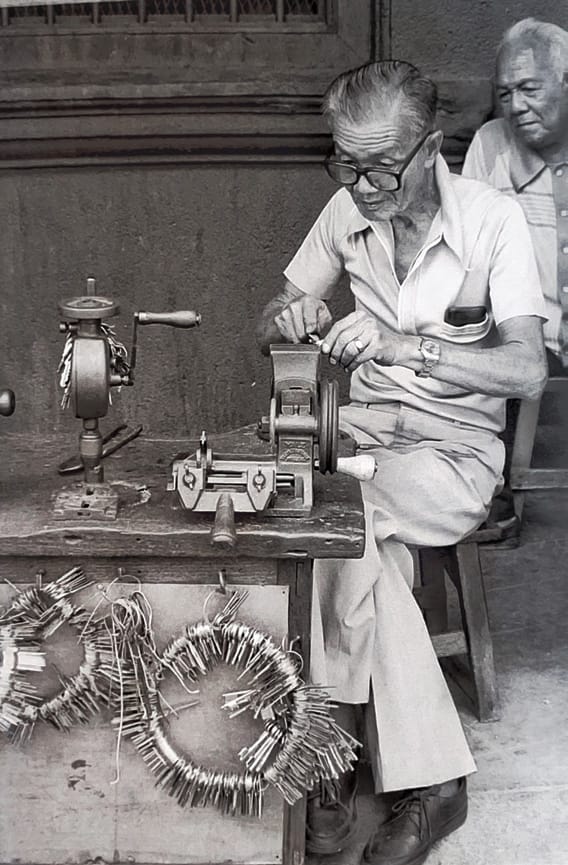
1: THE KEY-CUTTER
Their work is associated with locksmithing, one of the oldest trades with roots in Ancient Egypt and Mesopo-tamia. The earliest locks were simple wooden devices, but medieval locksmithing became more sophisticated, with craftsmen producing more complex keys and locks. Locksmithing grew out of blacksmithing. Indeed, early key-makers were often metalworkers who could forge, file and fit keys to locks. Before key-cutting machines were invented, keys were hand-filed to match each individual lock, which made this work highly skilled and time-consuming.
2: THE WATCHMAKER
Penang’s watchmaking history is one of family-run repair shops. Its watch businesses began as small trad-ing shops serving a port-city where imported goods, fashion items and timepieces were in demand. Their existence as dedicated tradesmen reflects a deeper craft tradition where trained watch mechanics handled strap changes, movement replacements, overhauls and res-torations. Repair work for mechanical watches required skilled labour, long before digital and quartz watches became dominant.
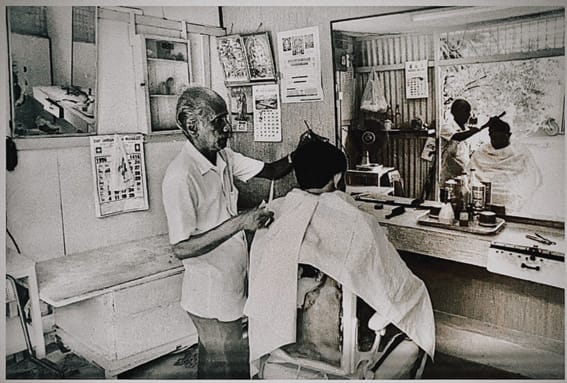
3: THE BARBER
Old barbershops are part of Penang’s living heritage, with some still operating from pre-war shophouses, preserving their old-school tools and techniques. These shops were important because Penang, especially George Town, has long been a port-city where small trades like barbering became embedded in neighbourhood life. Traditional barbers often served the same local customers for decades. Their appeal today comes from authenticity: old barber chairs, straight razors, simple service menus and interiors that have changed very little over time.