
I HAVE A strong affinity to textiles—probably because when I was a wee girl, I would often wan - der among rows and rows of rolls of fabric, while my mother, who was a seamstress, slowly picked out the materials she needed to make clothes for her customers. When I started working and began travelling around Southeast Asia, I would make it a point to stop by a textile store to pick up a few metres of fabric to bring home—my most treasured being the Cambodian Silk Ikat (known as chong kiet in Khmer) and the Royal Pahang Silk.
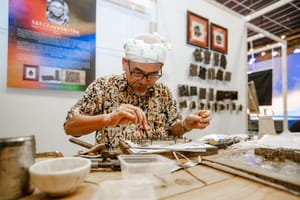
Owning the Profound Art of Batik Making
by
Rachel Yeoh
Previous Post
Wise to Have Travel Mishaps, Misfortunes and Misadventures Covered
6 min read
TRAVEL HAS SURELY picked up with the pandemic now in our collective rearview mirror for the most part. The numbers…

Next Post
Local History Matters Most Immediately
7 min read
IN THE GRAND theatre of social media—where cat videos reign supreme and discussions about anything often devolve into spirited…

You might also like
Penang’s Pasar Malam: The Rhythm Of Community And Local Business
10 min read
ASIA’S NIGHT MARKETS, or “pasar malam”, as they are called in Malaysia, are a popular and established form of…


Photographing The “Dying Trades” of George Town
5 min read
I WAS FLÂNEURING among artisanal traders along the streets and alleys of George Town in 1996, with a Leica R…