
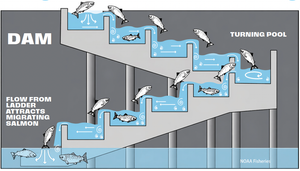
RIVERS ACT AS nature’s highways, allowing fish to travel upstream and downstream to find food, avoid predators and, most importantly, reproduce. In Malaysia, these movements are particularly crucial in river systems such as the Perak, Pahang, Muda and Rajang, which support diverse freshwater species and, by extension, sustain inland fisheries and local communities. However, many of these rivers are interrupted by dams. While essential for meeting human needs, these structures disrupt natural river flows and block fish migrations, thus fragmenting existing eco-systems and reducing biodiversity. To mitigate these effects, fish ladders—structures built alongside dams or river barriers that allow fish to bypass these obstructions—can be designed to give fish alternative pathways, helping them continue their natural migrations.
GETTING AROUND DAMS
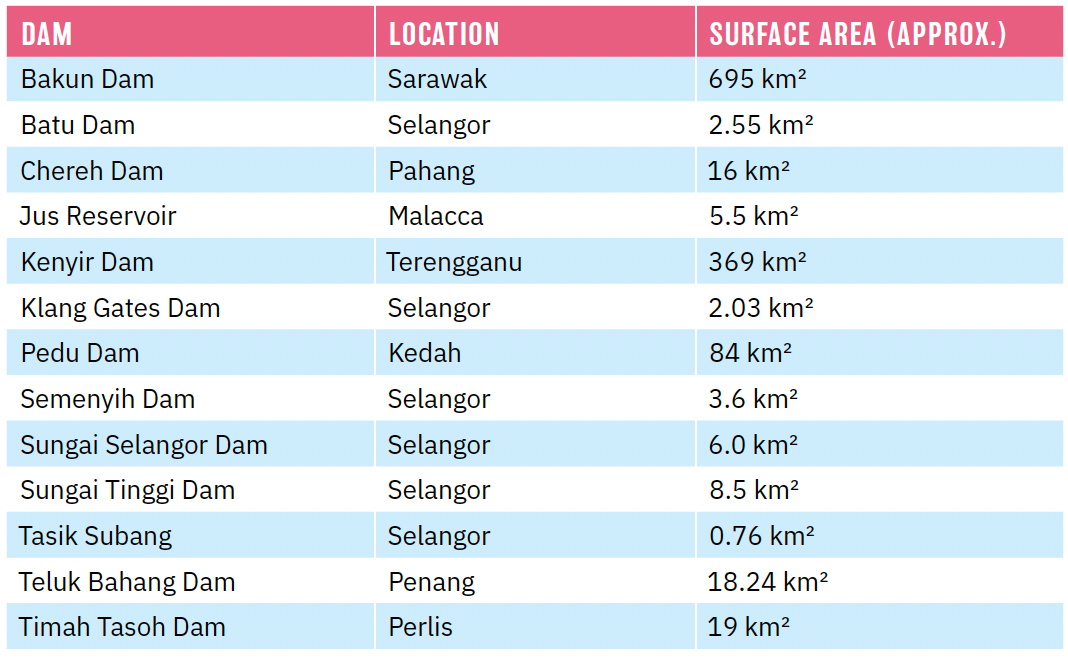
Malaysia currently has 104 dams with a total storage capacity of roughly 84,000mil m³ of water, 83 of which are located in Peninsular Malaysia and 21 in Labuan, Sabah and Sarawak. 81 are classified as large dams, while the remaining 23 are smaller structures (see Table 1). For a population of 31mil people, this represents a supply of approximately 2,700m³ of water per person. Many were initially constructed without plans to raise their heights, but several have since been elevated to increase capacity. Notable examples include the Bukit Merah Dam (raised in 1965 and 1984), Klang Gates Dam (1979), Durian Tunggal Dam (1992), Lebam Dam (1992), Sungai Tinggi Dam (2003) and Timah Tasoh Dam (2010). Plans are also underway to raise the Bekok and Mengkuang Dams. Mostly built in upland and interior catchments, where narrow valleys allow for efficient storage, they serve multiple purposes including water supply, irrigation, hydropower, flood control, and recreation.
Some Malaysian freshwater species depend on migration to complete their life cycles, including kelah, lampam and tengas. They move along rivers to reach their feeding or breeding areas, particu-larly during monsoon seasons when water levels change. When these movements are blocked, fish may fail to reach their spawning grounds, become trapped in unsuitable habitats and experience population decline over time. Similar problems have been observed worldwide, where blocked rivers have led to reduced fish stocks and biodiversity loss.