
ZINEDINE ZIDANE’S LEGENDARY footballing career came to its close when he received his infamous red card at the 2006 World Cup. Red and yellow cards need little introduction: they are part of the disciplinary system regulating permissible play and accountability on the pitch.
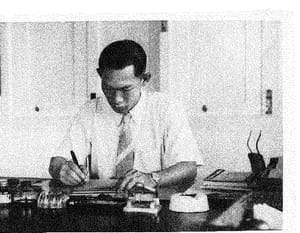
Before the system became our universal language for footballing accountability, someone, somewhere, had to invent it. He was a Malayan schoolmaster: Koe Ewe Teik. Every time a referee reaches for the cards in their pockets, they are speaking a language born from a former student of Penang Free School.
FROM MIGRANT TO EDUCATOR
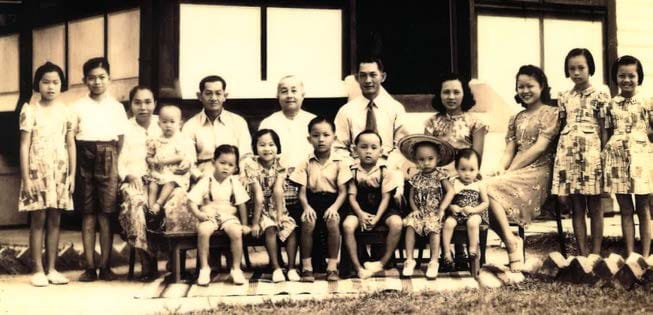
In 1912, in the coastal town of Songkhla, Siam, the Koe family knew the unpredictable, violent fortunes of immigrant life. Ewe Teik’s father, Wan Toh, had journeyed there from Fujian Province. His mother, Guat Choo, possessed an entrepreneurial spirit but also a weakness for gambling tables. When the family’s wealth vanished, young Ewe Teik watched his mother peddle homemade cakes from a sampan, and the family had to survive on rice porridge and fermented tofu.
In 1924, they moved south to Penang.
It was not an easy transition. Enrolled in a Chinese school, Ewe Teik was mocked as a “Siamese devil” and forced to fight his way out of corners. Fortunately, his eventual move to the English-medium Penang Free School proved timely. He worked part-time as a clerical assistant just to afford his own clothes and tobacco. Once, while collecting homework in his capacity as class monitor, his metal cigarette case slipped from his pocket and crashed to the floor, spilling its contents under the teacher’s stern gaze. He did not panic. Instead, he calmly gathered up his cigarettes, closed the case, and carried on.
By the time he graduated in 1929, he had internalised a code of discipline and resilience. Denied a university education by financial circumstances, he entered the Education Service, serving as a trainee teacher in Batu Pahat. He kept snakes and insects in glass jars to encourage the study of nature, and he would demand that students speak with clarity and correctness. In 1939, the authorities appointed him the first headmaster of the Government English School in Kluang. He was just 26.
He was more than just an administrator, however, and even designed the school’s flying fox emblem and motto: “On and Onwards”. He cared deeply about the dignity of the young people in his charge. When he saw his boys spending money they did not have on imported hair pomade, he did not issue a ban. Instead, he led them to the tuck-shop, gathered up aluminium pots, and taught them how to manufacture their own hair cream. In 1941, an in experienced English doctor sought to transfer him to Johor Bahru for an operation. Ewe Teik, knowing that the journey might kill him, looked the doctor in the eye and commanded him to operate right there. He was the author of his own fate.