

AGEING IS OFTEN discussed in terms of inevitability rather than possibility. For younger people, it exists somewhere in the abstract future; for older adults, it is frequently accompanied by expectations of withdrawal from work, from visibility and sometimes from public life altogether. Yet, as life expectancy rises and health outcomes improve, such assumptions are increasingly being reconsidered. Later life is no longer simply about slowing down; for some, it has become a stage for continued participation.
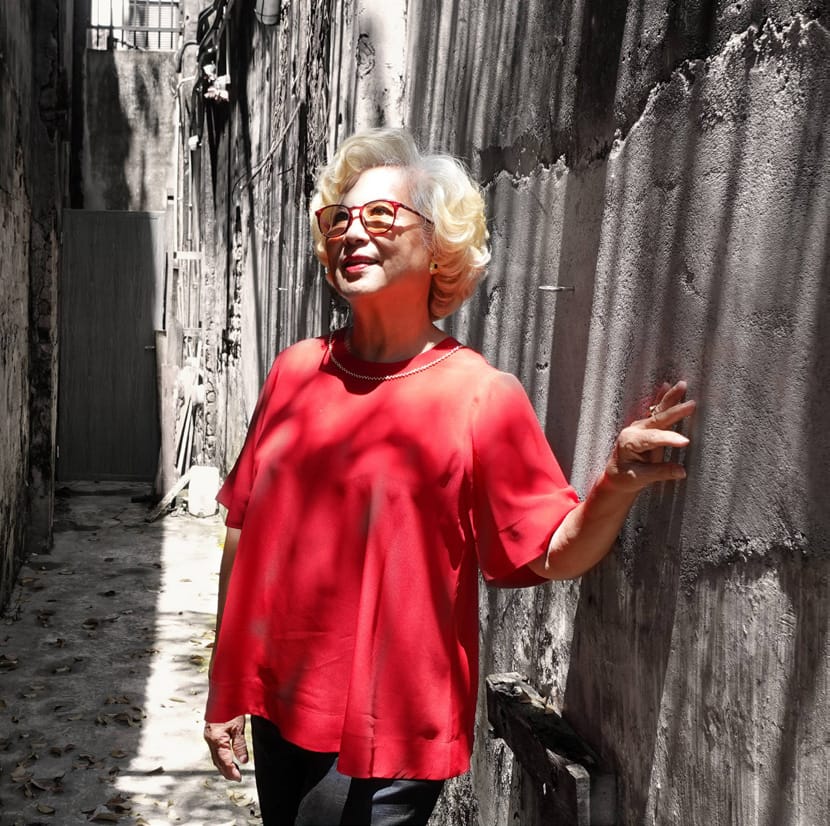
Baby Goh—founder of Baby Goh Cleaners, Bumiteras Resources and Cleanions—belongs to a generation quietly reshaping what it means to grow older. Rather than receding from professional and social spaces, she has remained actively engaged in business, community initiatives and personal pursuits, showing that ageing may be less about retreat than about recalibration.
Born Goh Baby @ Goh Lay Dee on 27 January 1955 in Simpang Ampat, Seberang Perai, she grew up in a modest double-storey corner shop lot within a large household of eight siblings. Her professional name, “Baby”, originated from a spelling error, but it endured, eventually becoming inseparable from her public identity. Childhood was structured around shared responsibilities within the family—tending to animals, harvesting coconuts and contributing to household routines. These experiences fostered early self-reliance and cooperation.
A central influence during these formative years was her mother, who balanced domestic duties with farm work and coconut harvesting, while ensuring that all her children received an education. From this example emerged a working philosophy grounded in discipline, endurance and accountability.
Education provided both mobility and perspective. Baby Goh was the only sibling to attend Convent Bukit Mertajam for primary and secondary school—a routine that required predawn mornings, lengthy travel and the balancing of academic and domestic obligations. Her continued involvement with the school, including serving on its Board of Governors and later as Alumni President, reflects an enduring commitment to institutional continuity and community ties.
Her entry into the workforce began at age 18 as an Operations Trainer at National Semiconductor in Bayan Lepas, where she developed organisational and managerial competencies that would later underpin her entrepreneurial transition. After a stint in foreign maids recruitment services, she established her own cleaning company, expanding into residential and industrial sectors at a time when professionalised cleaning services were still an evolving business locally.
As the business matured, Goh’s hiring strategy took on a distinct social dimension. Through Bumiteras Resources, she prioritised local employment, particularly among single mothers and individuals from the B40 income group, introducing flexible work arrangements that acknowledged caregiving responsibilities alongside economic necessity. In doing so, the enterprise functioned not merely as a commercial operation, but as a modest mechanism of social support. Later, Goh took this further in a collaboration with the Penang Prison Department’s rehabilitation programme, through which female inmates on parole are employed as cleaners until the completion of their sentences.
Such efforts reflect a pragmatic approach to reintegration—one that recognises dignity and economic participation as important components of second chances.
The launch of Cleanions and its accompanying app in 2019 marked another adaptive step, integrating services ranging from cleaning and sanitisation to caregiving and gardening into a one-stop digital platform. The move proved particularly significant during the Covid-19 pandemic, underscoring the role of adaptability not only in business longevity, but also in individual relevance.
Her activities outside business similarly resist conventional narratives of ageing. In 2025, she co-initiated Glammas, a community-driven movement advocating active ageing and visibility among women aged 60 and above through fashion presentations, dance performances and fundraising efforts supporting organisations such as Rose Charities Malaysia, D’Home Mental Health Association and Penang Pink Ladies. The initiative subtly challenges our cultural tendency to render older women socially peripheral.
A multidimensional woman, Goh also represented the World Sport Stacking Association Penang (WSSA Penang) and emerged as the 2025 Senior 1 Champion for the 65–74 age category, setting the Malaysian record for the division.
Underlying these commitments is a guiding principle she often articulates: “Give and share all you can before you leave.” Over the years, she donated blood 45 times until medical advice required her to stop at age 64, after which she registered as an organ donor. The gesture reflects a consistent ethic of contribution that extends beyond professional life.
Active ageing, in this sense, is not about defying time, but about remaining in conversation with it—staying socially connected, physically engaged and open to reinvention. Whether through line dancing, travel, community work or entrepreneurship, Baby Goh’s trajectory illustrates how later life can function less as an epilogue and more as an evolving chapter.
If ageing is ultimately a collective experience, then examples such as hers invite a broader reconsideration of how societies understand productivity, relevance and participation. Growing older, it would seem, need not require stepping aside; it may instead offer an opportunity to step forward differently.