
DRIVING DOWN THE Butterworth–Kulim Expressway is a journey through a divide in history. On one side is Permatang Pauh in mainland Penang, a place that chose to build its identity around paddy ridges and university halls. On the other is Kulim in Kedah, a town that basically paved over its old agricultural estates to build a high-tech future. It is wild how spending my childhood in both small towns has helped me realise how similar, yet entirely different, these places are. Every time I return there, I experience the feeling of balik kampung, even if I did not exactly grow up in kampongs. In fact, visiting my grandparents in Kulim as a kid in the 2000s, the town felt enormous. So too did Permatang Pauh, where I lived then
(and which is now my weekend home).
These small towns have experienced some major changes which started with blueprints drawn up in the 1990s, before I was born. By the time I was old enough to be staring out the car window, I was already looking at two towns that already led divergent lives, each leaning towards their respective visions of the future.
FROM JUNGLE HIDEOUT TO INDUSTRIAL TOWN
It is funny to think of Kulim as an industrial town now: it actually started as a jungle hideout. In the 1850s, tin miners fled the brutal triad wars in Perak, heading towards Penang. However, their plans fell short after they realised that the island was a busy British port at the time, and so they decided to settle down in Kulim. So long as there was no interference from the triads, the dense forests of southern Kedah were their sanc-tuary. With promising discoveries of tin ore in Kulim, it became a frontier town in every sense of the word. A civil war, the “Perang Kulim”, broke out among the chiefs of the tin mines in 1888, which actually started as a fight over the town’s most beautiful Chinese woman. This event’s other name, “Perang Nyonya Cantik”, tells you all you need to know.
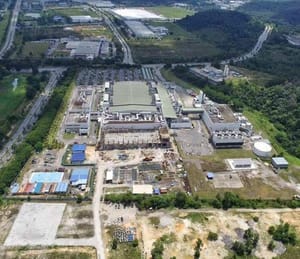
By the 2000s, Kulim was already well-established and only getting busier. It had already experienced its first real industrial change in the 1980s, with the rise of the Kulim Industrial Area, where factories were established to manufacture machinery and metal parts. Industry was part of the personal stories of many residents: my mother, aged only 18, got her first real job at one of these factories. The opening of the Kulim Hi-Tech Park (KHTP) in 1996 brought a second wave of change. According to Kulim-born Yunus Yusof, the KHTP site was originally an oil palm plantation before it was gazetted as an industrial zone. Designed and built as a standalone township separate from the old town centre, complete with its own public amenities, it was imagined as a key component of Malaysia’s Vision 2020.
With its establishment, Kulim became a major commercial player in the north. It also made possible new ideas about what the good life looked like. For my mother, the houses in KHTP were always the nicer-looking homes in town. At that time, she assumed that the only people who could afford staying there were the chief executive officers and directors of the factories. Even now, Kulim is still expanding. Yunus mentioned how the town is bringing new satellite zones into the northern region, such as Kuala Ketil, which is now developing faster to cater to demands from KHTP. “A new Kulim International Airport is also being planned to boost the town’s economic growth,” he added.