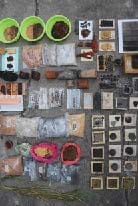
BOATS NEGOTIATE MANGROVE-LINED waterways towards the Sepetang’s river-mouth, the smell of charcoal from domed kilns permeating the air. Aboard are mangrove logs, too dense to float, harvested from the Matang Mangrove Forest Reserve and bound for the factories at the town’s edge. This relationship between industry and conservation is crucial to considerations of space, ecology and industrial heritage in Kuala Sepetang’s extensive Reserve. Stretching northwards to Kuala Gula, near the state border with Penang, it is not just a passive natural resource, but also a driver of the settlement’s key “sunset industry”: charcoal production.
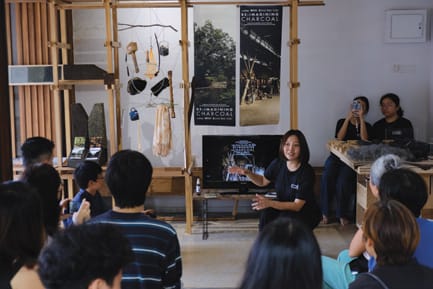
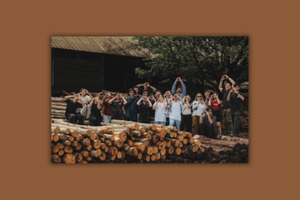
As Doris Quek and Lim Ker Chwing, architect-lecturers from UCSI University and founders of Colllab 社计手, explained, their “Reimagining Charcoal” project sought to bring together architects, material experts and students to explore the site’s industrial heritage.[1] Approximately 80% of Kuala Sepetang’s charcoal output—classified as “Grade A”—is exported to markets abroad, such as Japan. However, changing cooking practices, which phased out charcoal-fired stoves for gas or induction cookers, have shrunk the domestic market, forcing producers to repurpose charcoal for toothbrush-making, ornaments, and “vinegar” (distilled from the vapour rising from the kilns, used as an insect repellent and deodorant). But their interventions do more than preserve the industry. Instead, these involve a “recon-sideration of the scale and direction of production, by exploring ways to move from export-driven models towards more localised [ones] for long-term ecological and social stability,” as they jointly explained.